Pokewalker · Gym leaders
The leader reads your team
A gym leader on the walker doesn't have one fixed team or one fixed level. Like Brock in the anime, they look at who you've brought, say what they make of you, and choose their Pokémon and their strength to stay one step ahead. You still have to walk to get there.
Sixteen leaders, sixteen arenas
Every leader from Kanto and Johto, Brock to Clair, fights in a stadium built in their own style. The field, the lines and the three lanes are the same everywhere, so a battle plays the same; what changes is everything around it.
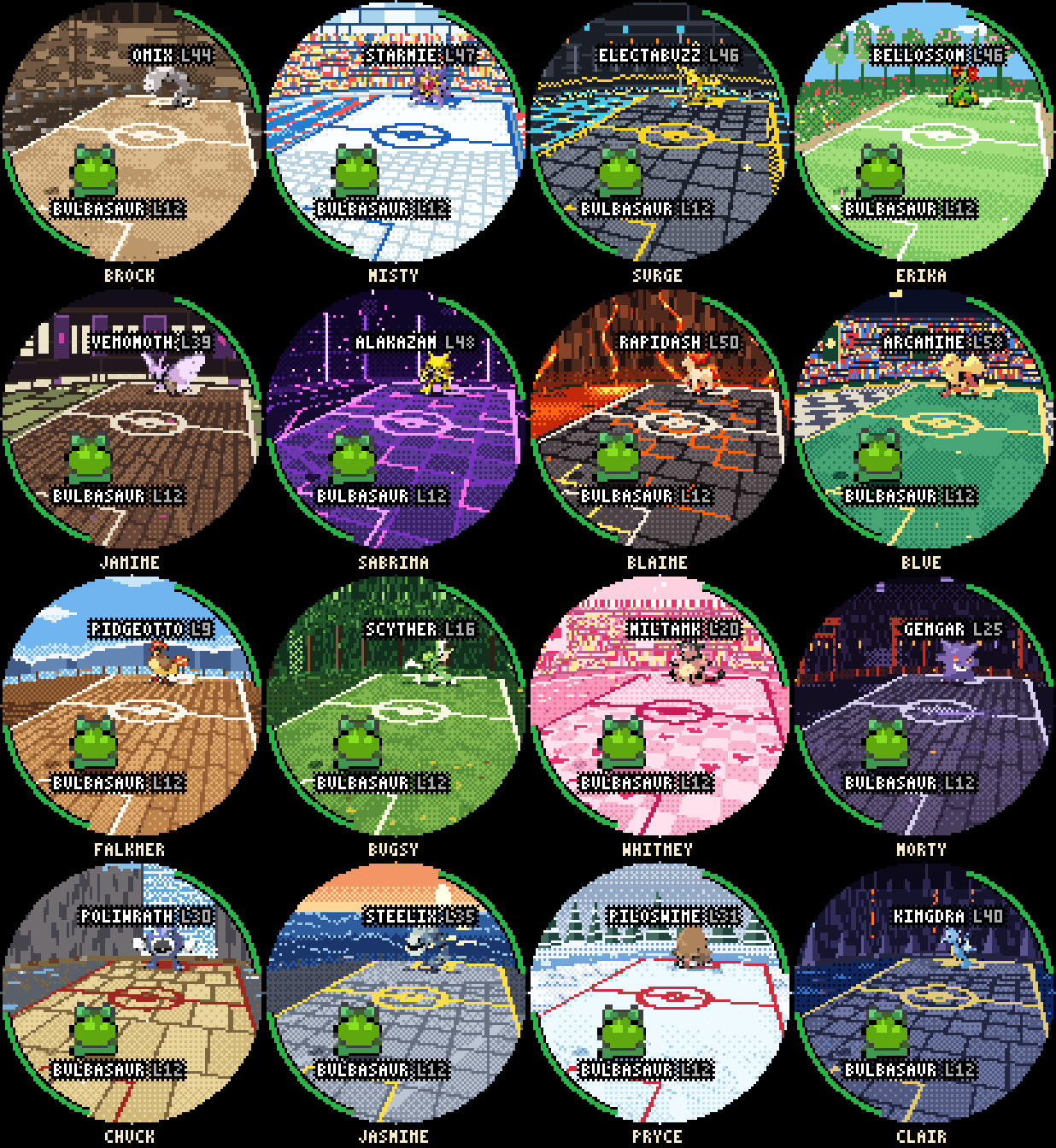
Brock fights on a rocky floor. Misty fights over a pool, Surge on a steel plate with circuits running through it and a barrier that arcs, Erika in a garden of blossom, Sabrina in a violet hall where the rings pulse. Blaine fights in a volcano: the floor is cracked basalt with lava moving underneath, and embers drift up the crater wall. In Johto, Falkner fights on a wooden deck high above the mountains, with birds overhead. Bugsy's field is a forest floor under falling leaves. Morty's shrine is dark boards and red gates with fog drifting across it. Jasmine's lighthouse turns its beam over the sea at dusk, and Pryce's floor is an ice rink in falling snow.
Getting there
You don't get to walk into a gym. Leaders come region by region, in the games' own order: Kanto first, starting with Brock, then Johto. Each one asks for two things before you can challenge them: steps walked since your last badge, and enough Pokémon on your team. There is no level requirement. How strong you are is the leader's problem, not the gate's.
| Region | Leader | Steps since last badge | Team |
|---|---|---|---|
| Kanto | Brock | 500 | 1 |
| Misty | 1,000 | 1 | |
| Surge | 1,500 | 2 | |
| Erika | 2,000 | 2 | |
| Janine | 2,500 | 2 | |
| Sabrina | 3,000 | 3 | |
| Blaine | 3,500 | 3 | |
| Blue | 4,000 | 3 | |
| Johto | Falkner | 5,000 | 3 |
| Bugsy | 5,000 | 4 | |
| Whitney | 6,000 | 4 | |
| Morty | 6,000 | 4 | |
| Chuck | 7,000 | 4 | |
| Jasmine | 7,000 | 5 | |
| Pryce | 8,000 | 5 | |
| Clair | 10,000 | 6 |
That's 72,000 steps from the first badge to the last. The battle menu tells you what's still missing ("WALK 2,000 MORE", "NEED 3 POKEMON") and the walking screen announces it when the next leader is ready for you.
Lose, and that leader rests until tomorrow. You can't grind a gym; you come back.
The leader reads your team
When you arrive, the leader looks at what you've brought: how many Pokémon, how strong your best one is, whether any of them can hit the gym's type hard, how many badges you already hold and how you've been doing in battle. From that they decide what kind of trainer you are: rookie, trainer, ace, veteran or champion-class.
Then they build their team to suit, members and power both. Every leader has a roster built from the Pokémon they've used across the series, not just one game's party, and they pick from it: a rookie meets a couple of their lighter Pokémon, a veteran meets their best. Their levels aren't fixed either. They're set from yours, so their ace is always a little stronger than your strongest, and they never bring fewer Pokémon than you do. Turn up at Brock with a strong team and Brock is strong too.
It's a challenge, not a wall. Across thousands of simulated battles at every tier, a challenger wins about four times in ten, with good tactics doing the rest. Come back the same day with the same team and you'll meet the same leader team, so a loss teaches you something.
What they say
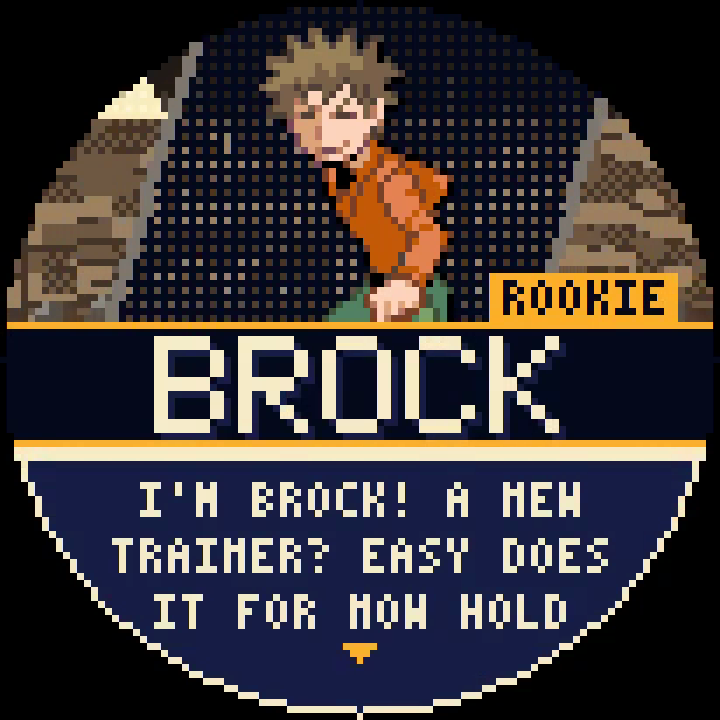
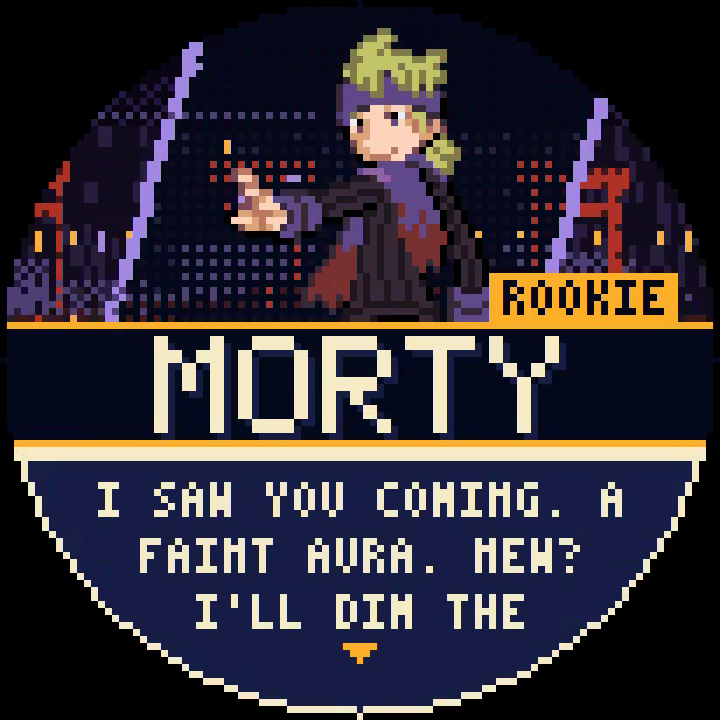
The leader tells you what they've made of you before a ball is thrown. Every leader has their own lines, written for this, and the middle of their speech depends on your tier. Brock to a newcomer: "I'm Brock! A new trainer? Easy does it for now." Brock to someone with a reputation: "So you're the one. No holding back!"

The entrance
Each gym battle opens with the camera circling the arena while the gym's name types out. Then the leader's portrait sweeps in over their element (Blaine through flame, Morty out of fog, Surge in a crackle of lightning) with their name on a ribbon and your tier on a gold tab beside it. Their speech types out underneath. BOOT or a tap skips ahead.
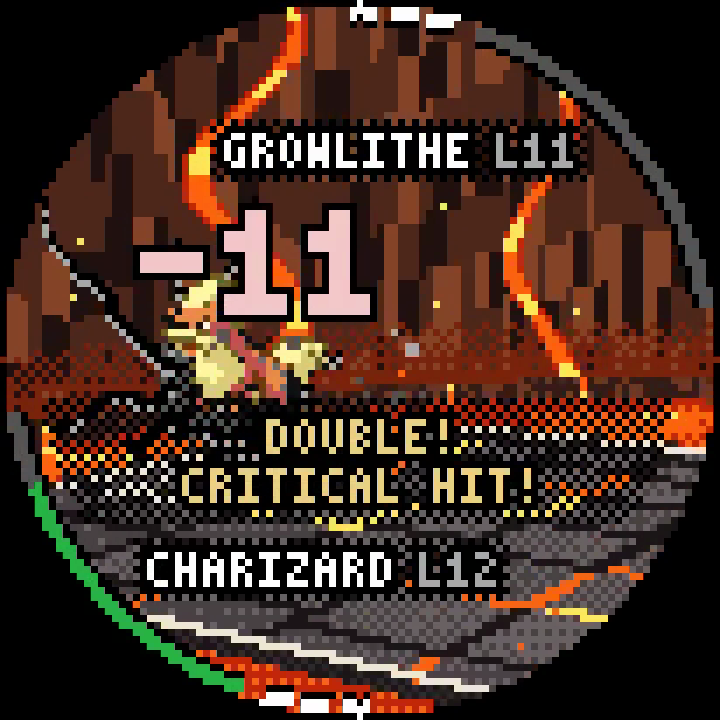
After that it's the battle you already know: the match card, the throws, the lanes, the clashes on critical hits and knockouts into the wall. Only now the wall is a crater rim, or a lighthouse rail, or a garden hedge.

The badges
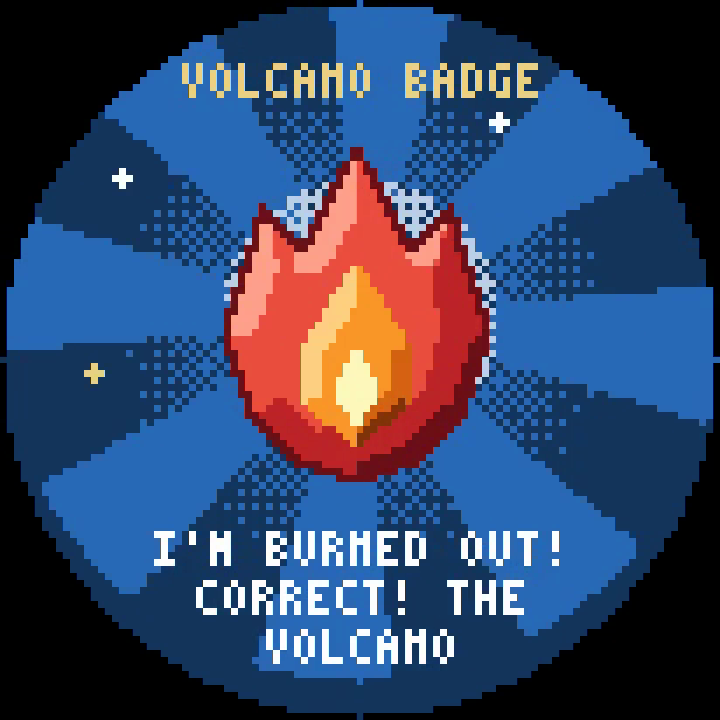
Win, and the badge flips in on a burst of light, lands with a ring, catches the light, and the leader says their piece. Each of the sixteen is drawn large for that moment, with metal shading and a glint that comes round every couple of seconds, and small for your trainer card, where the ones you haven't earned wait as grey shapes.

How it's built, and how it grows
Gyms are data, so they can change without rewriting anything:
- The ladder is one table: steps and team size for each place in the order. Retuning it is editing a row.
- Each leader is a roster, a set of tiers, some lines and a stage. Adding a leader, or a rematch with a stronger roster, is a new entry rather than new code.
- The balance is measured, not guessed. A test plays thousands of battles at every tier and fails if the challenger's chances drift outside a band, so a change to the battle engine can't quietly make a gym unbeatable.
- The arenas all share one field and swap the world around it, which is why a new stage is cheap.
What comes next builds on those pieces: rematches once you hold all sixteen, an Elite Four after them, and the portal taking part, so a badge you win shows on your trainer profile and the leaderboards know who's been through which gym.
Recorded from the walker's software in its desktop simulator, with the owner's own cartridge art for the trainers and Pokémon. The arenas and badges are original drawings. None of this has run on the board yet. Pokémon is Nintendo's.
← Back to devlog