Pokewalker · Battles
The stadium shakes
The battle engine from the last post now has a stadium to fight in. Every turn is decided by the engine; everything you see is the walker telling you what happened, as loudly as the moment deserves.
A whole match
This is a full three-on-three, start to finish: the match card, the send-outs, a beam struggle on a critical hit, knockouts into the wall, a switch, and the winner's board. The engine played every turn; nothing here is scripted.
Starting one
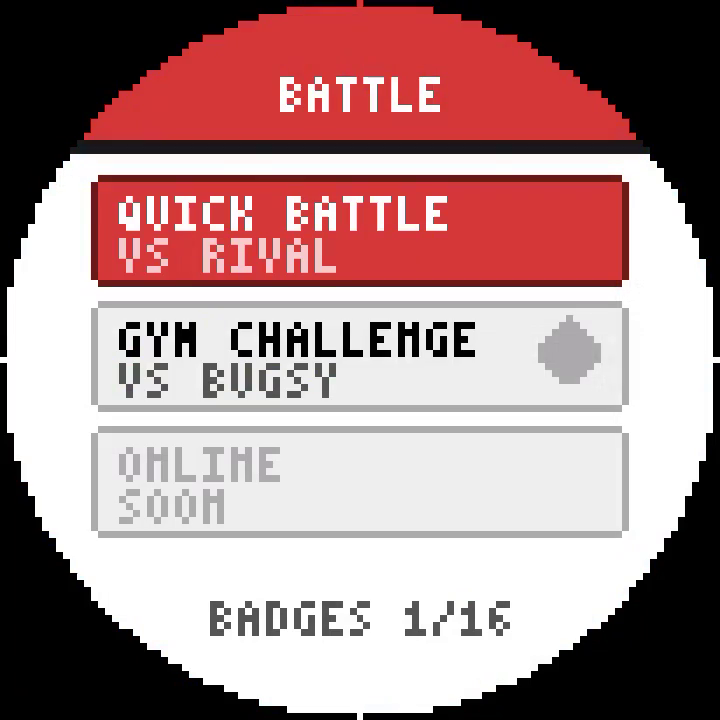
On the walker, open the ball and swipe to the games ring. The crossed swords are BATTLE. From there:
- Quick battle puts you against a rival whose team is matched to yours.
- Gym challenge puts you against the next leader you haven't beaten.
- Online is greyed out until the portal's live battles reach the walker.
BOOT starts the highlighted one and PWR backs out. PWR in the middle of a battle walks away from it, and walking away records nothing.
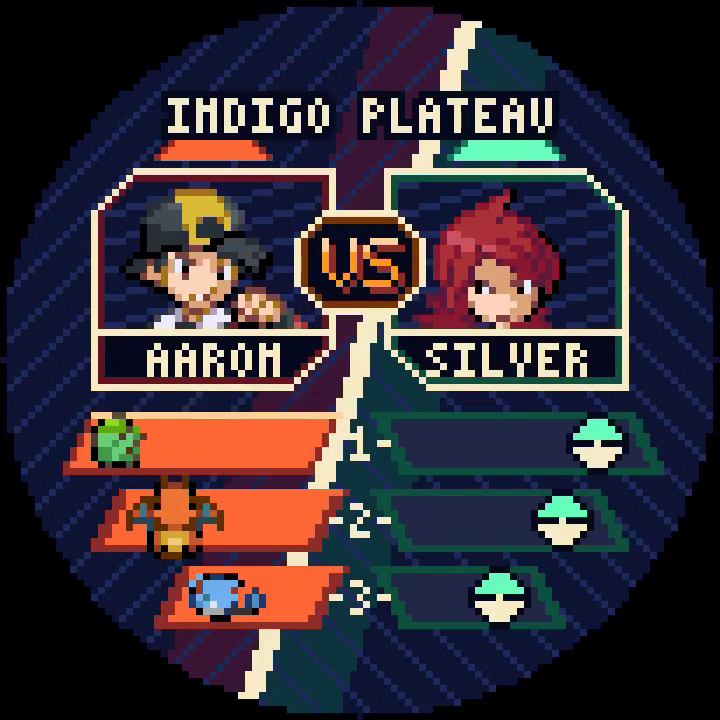

The match card and the send-out
A match opens on a card in the style of the anime's League scoreboard: both trainers' portraits, the event, and a bar for every Pokémon on each side. It comes back between knockouts with that Pokémon's bar gone dark, so you always know the score.
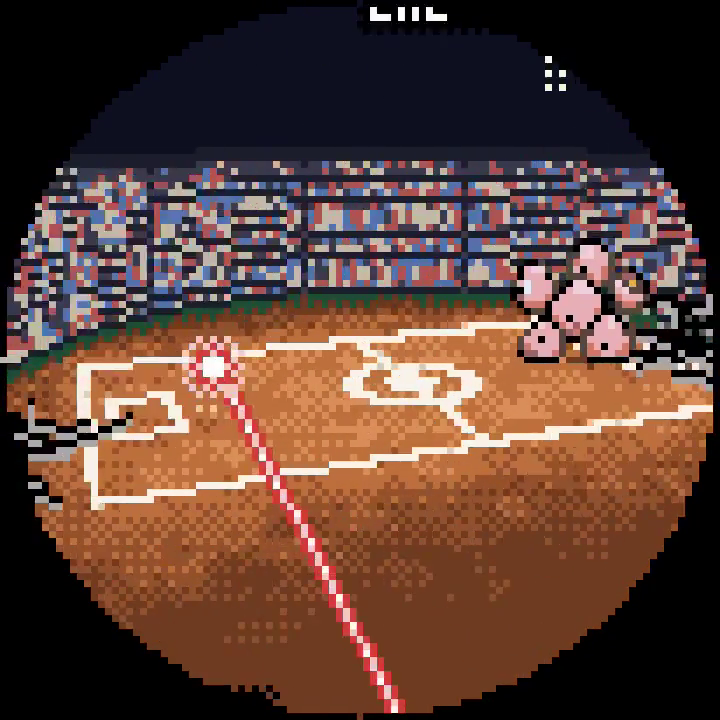
Then the balls come out. Each Pokémon is thrown in whatever ball it lives in on the walker, spinning at the camera, before it lands on its mark, pops open with the cartridge's own sound and the Pokémon forms out of the light. Switching one out is the classic red beam: it hits, the Pokémon becomes a ball of red light, and the light goes home.
How a turn works
The field is a clay stadium with three lanes: left, centre and right. Every turn, both sides choose a move and, in secret, where to stand: jump left, hold, or jump right. Both are revealed at once.
- Stand in the lane an attack is aimed at, or jump into it, and it lands for double.
- Jump one lane clear and it may still clip you for a graze, about half.
- Get two lanes clear and it misses.
Some moves cover more than one lane, and some always find their target. A fast Pokémon can clear two lanes in one leap, a heavy one shrugs off grazes, and jumping costs a little power. Under all of that sit Generation 1's real rules: stats, types, critical hits, status and switching. A trainer's tactics decide how their Pokémon play it: how aggressive, which way they like to dodge, whether they punish a Pokémon that keeps standing still.
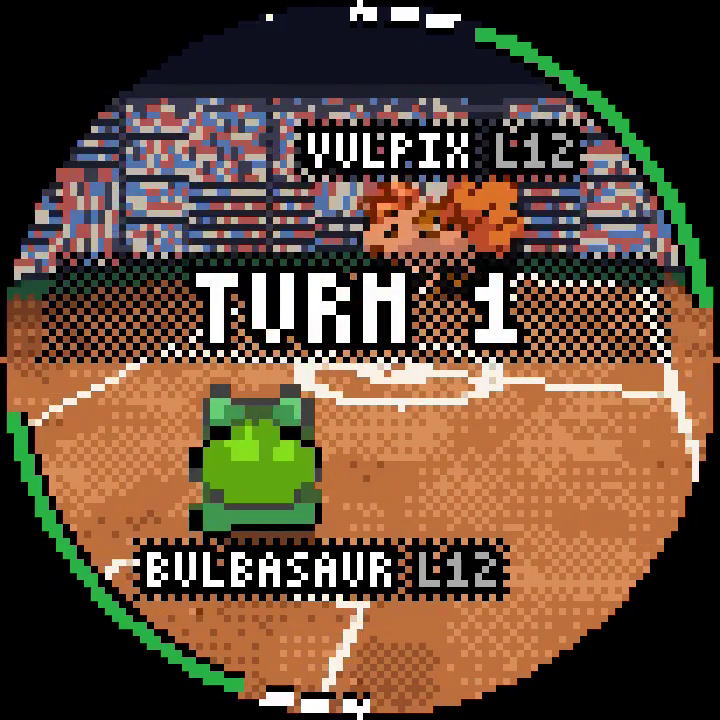
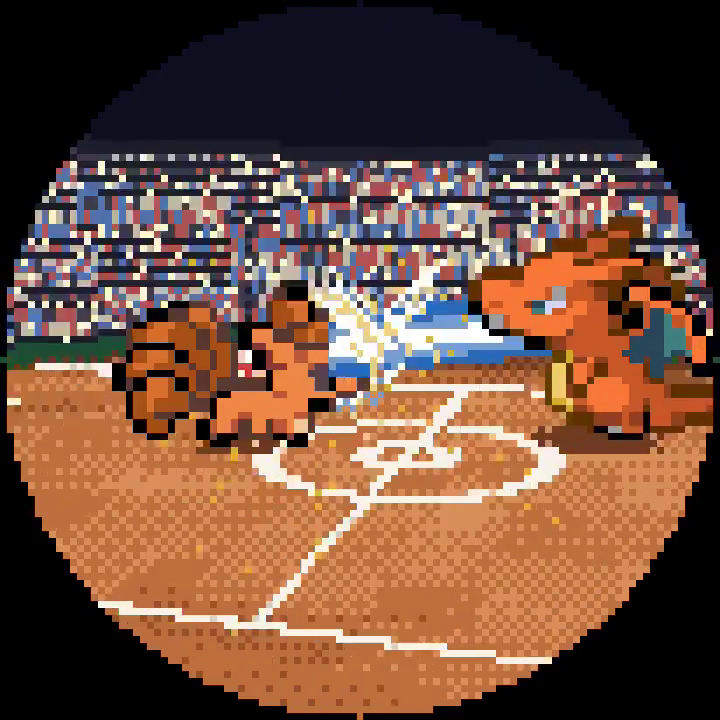
When the camera swings side-on
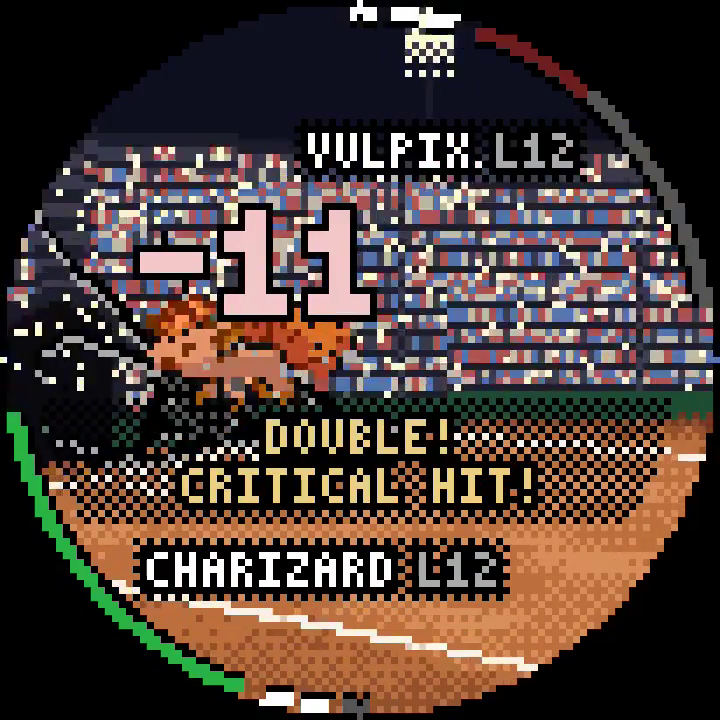
Most turns play one attack after the other from behind your Pokémon's shoulder. A critical hit changes that. When a turn has a critical hit and both Pokémon get to attack, the camera swings round side-on and they fire at the same moment. The two attacks meet in the middle of the field as a crackling ball of energy, and it shoves back and forth while the stadium shakes and the crowd's cameras flash. Then the side that landed the critical hit drives through.
It stays honest. The engine already decided the turn, so if the other side struck first, its hit lands first; if the critical hit knocks it out before it can act, its beam is swallowed and never lands at all.
Knockouts
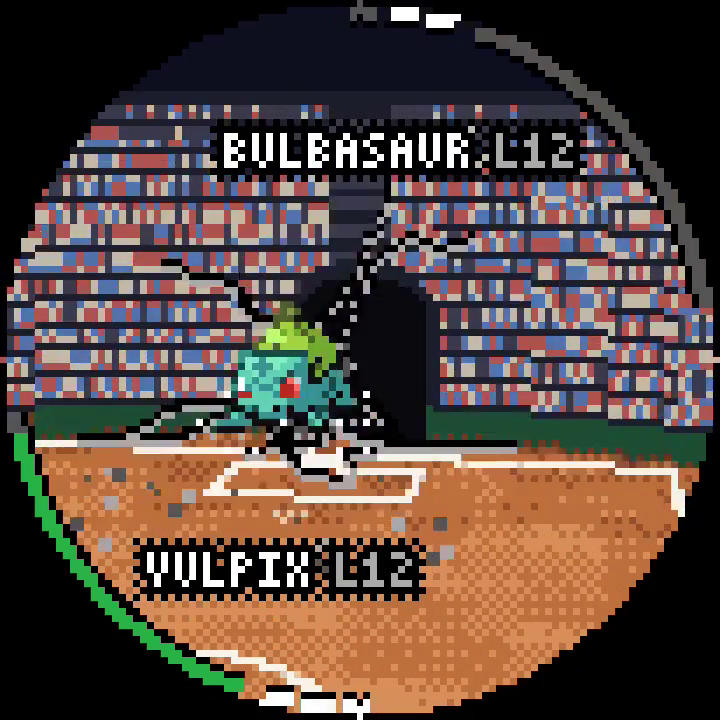
A knockout gets weight of its own. The last frames slow down, and the Pokémon is thrown back across the field into the stadium wall. It shrinks as it flies, because it really is travelling away from you, and where it hits, the wall cracks. The crack stays there for the rest of the battle, so a long match leaves its marks on the stadium.

How it's won
A battle ends when one side has no Pokémon left standing. When a Pokémon faints and its trainer still has others, the scoreboard shows, and the next one is thrown in. When the last one goes down, there is no scoreboard: the loser fades away at the wall, the winner stands in the stadium, and the WINNER board closes over them. A battle that somehow runs to two hundred turns is a draw.
Every result goes on your trainer card as wins, losses and draws, kept separately for local, online and ranked battles, along with your best winning streak.
Gym leaders
The gym challenge runs through all sixteen leaders region by region: the eight from Kanto, Brock to Blue, then the eight from Johto, Falkner to Clair. Each brings Pokémon from their own roster and their own portrait on the match card. The battles run on Generation 1's rules, so a Johto Pokémon fights with the stats of a close Kanto stand-in (Steelix as Onix, Miltank as Tauros) while still looking and sounding like itself, and moves that only exist in Gold are left out.
A leader's team isn't fixed. They size up the team you've brought and pick their Pokémon and levels to stay a little stronger than you, whatever your level. There's a whole post on how they do it.
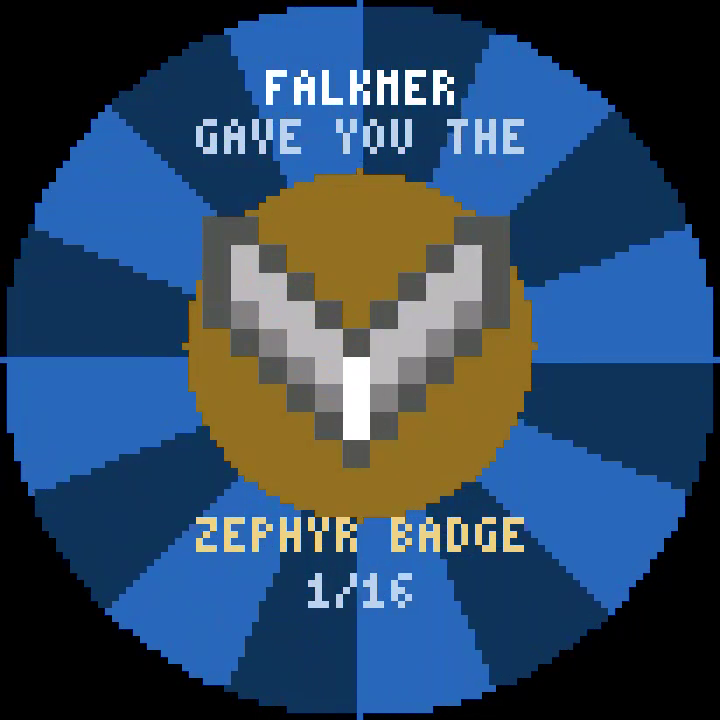
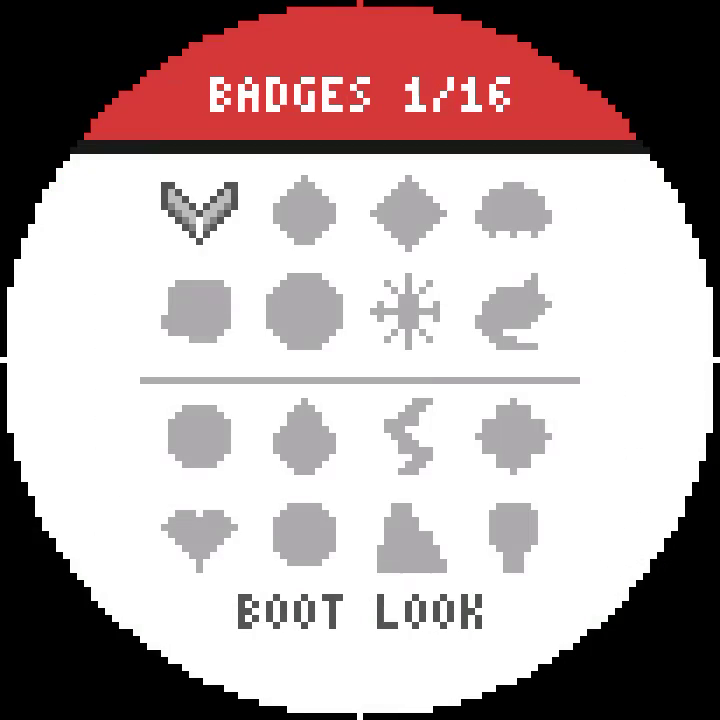
Beat one and the badge is yours. It grows in on a burst of light ("FALKNER GAVE YOU THE ZEPHYR BADGE, 1/16"), lands on a badges page of your trainer card, and the menu offers the next leader.
Sound
Battles play Pokémon Blue's battle themes on the walker's emulated Game Boy sound chip: Trainer Battle for a quick battle, Gym Leader for a gym, Final Battle for Blue, and the victory tune once if you win. Every move plays the sound effect Pokémon Gold gives it, recorded from the game's own sound engine, and each Pokémon cries when it comes out and when it falls.
Still to come
Battles are in the walker's software and run in its desktop simulator and the browser build; they haven't been played on the board itself yet. Battles against other people's walkers are next, through the portal: challenge a friend and the server plays both sides' tactics, or battle live and choose each turn yourself, with every match kept as a replay a few hundred bytes long.
Recorded from the walker's software in its desktop simulator, with the owner's own cartridge art and sound; it runs the same code as the device and the browser build. The battles have not been played on the board yet. Pokémon is Nintendo's.
← Back to devlog