Project · Wearable
Pokewalker
The Pokéwalker that came with HeartGold and SoulSilver, rebuilt and grown up. It runs on a round 412×412 touchscreen, designed to sit in a printed Poké Ball, and turns your steps into Watts. Your team lives in it. One of them can move into a room as a pet. A ring of games, a 3D stadium for battles, sixteen gym leaders, wild areas to catch in, RALLY races, a park other walkers share, a portal on the web, and a real Game Boy link-cable trade. A whole open region is being built round it. All of it is Rust, written from nothing.
Try it in your browser: the walker's own software, compiled to WebAssembly. Watch the one-minute film.
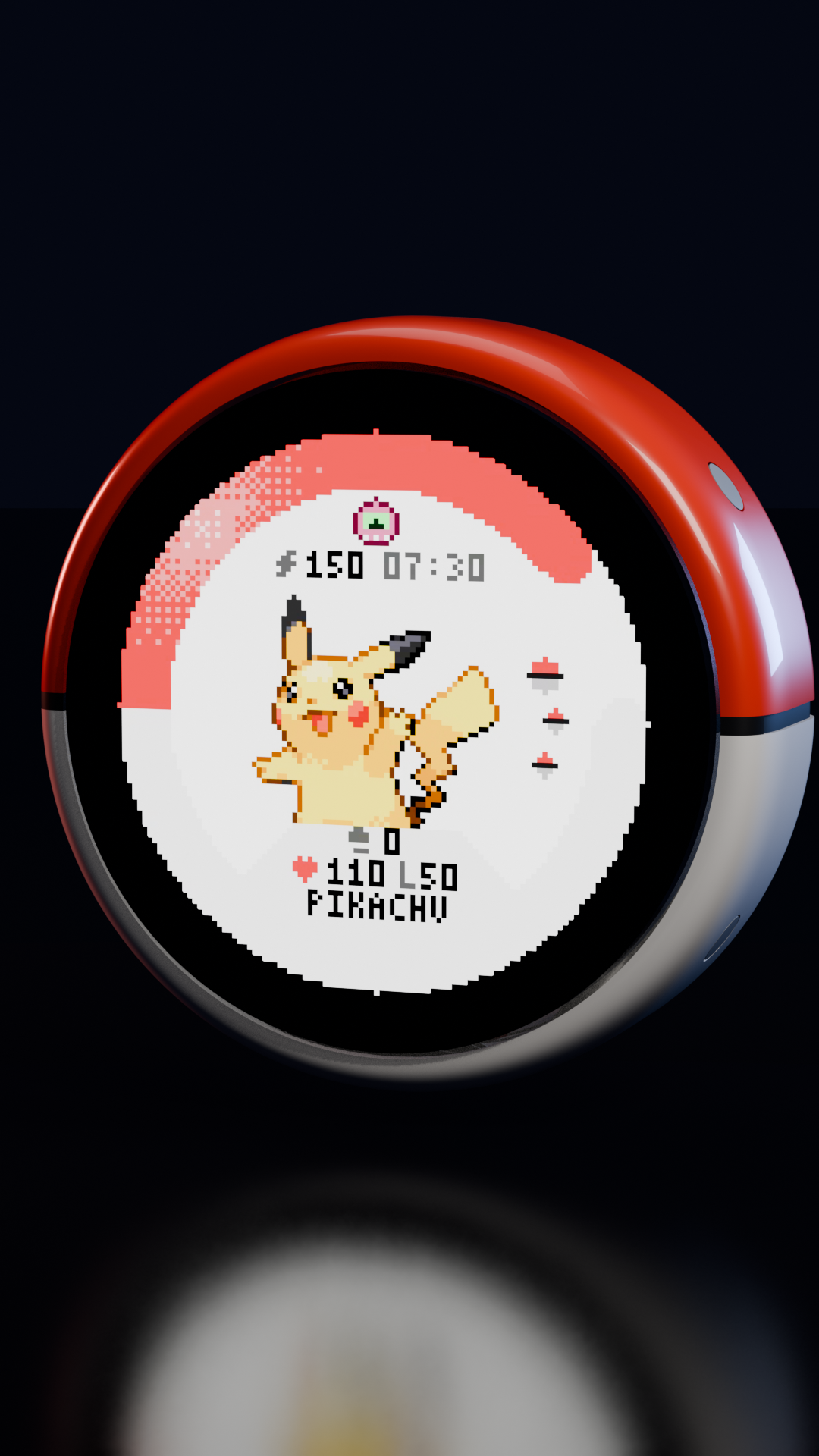
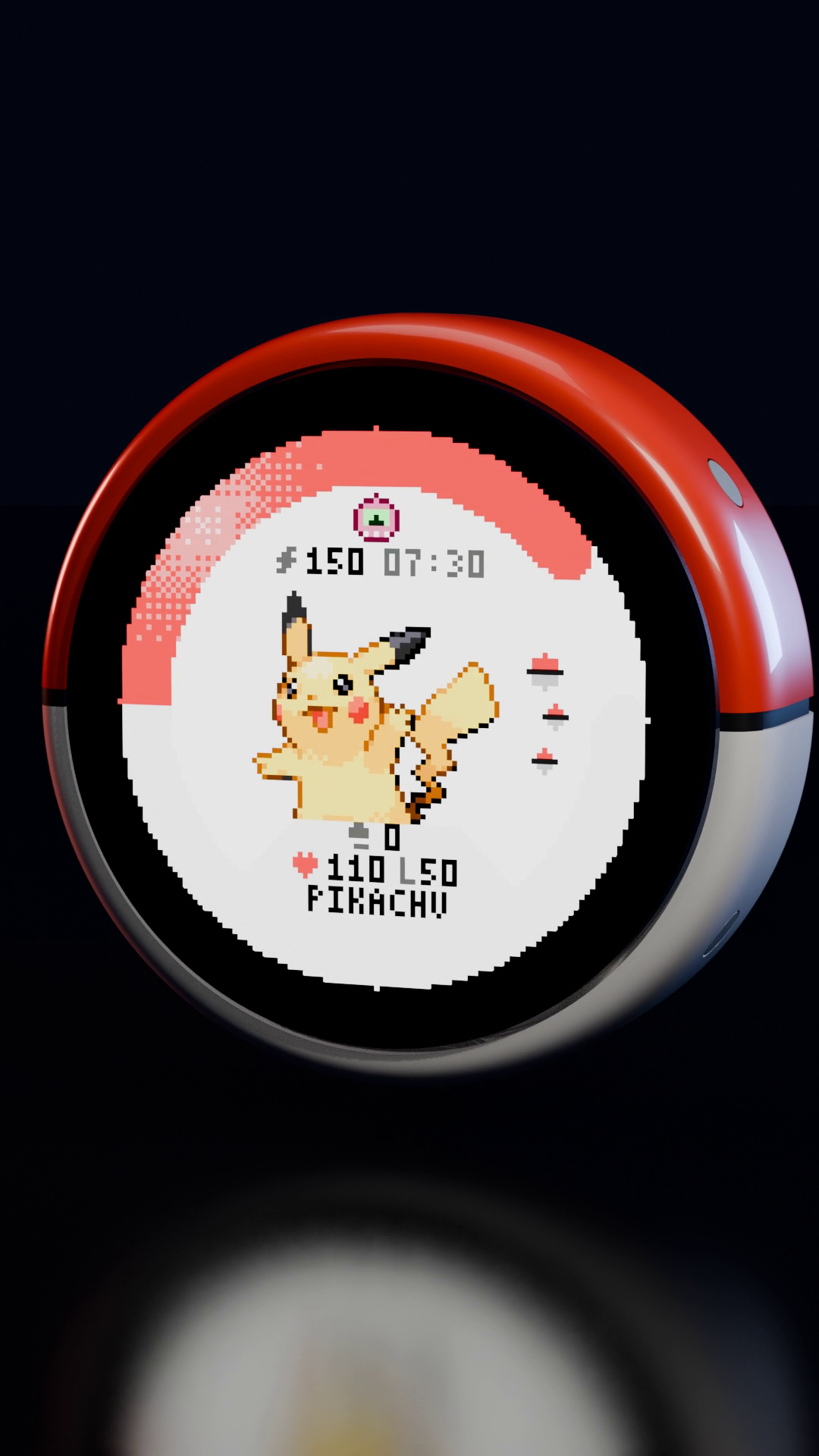
The device
A bought-in board and one printed shell.
The board
Waveshare ESP32-S3, round and touch
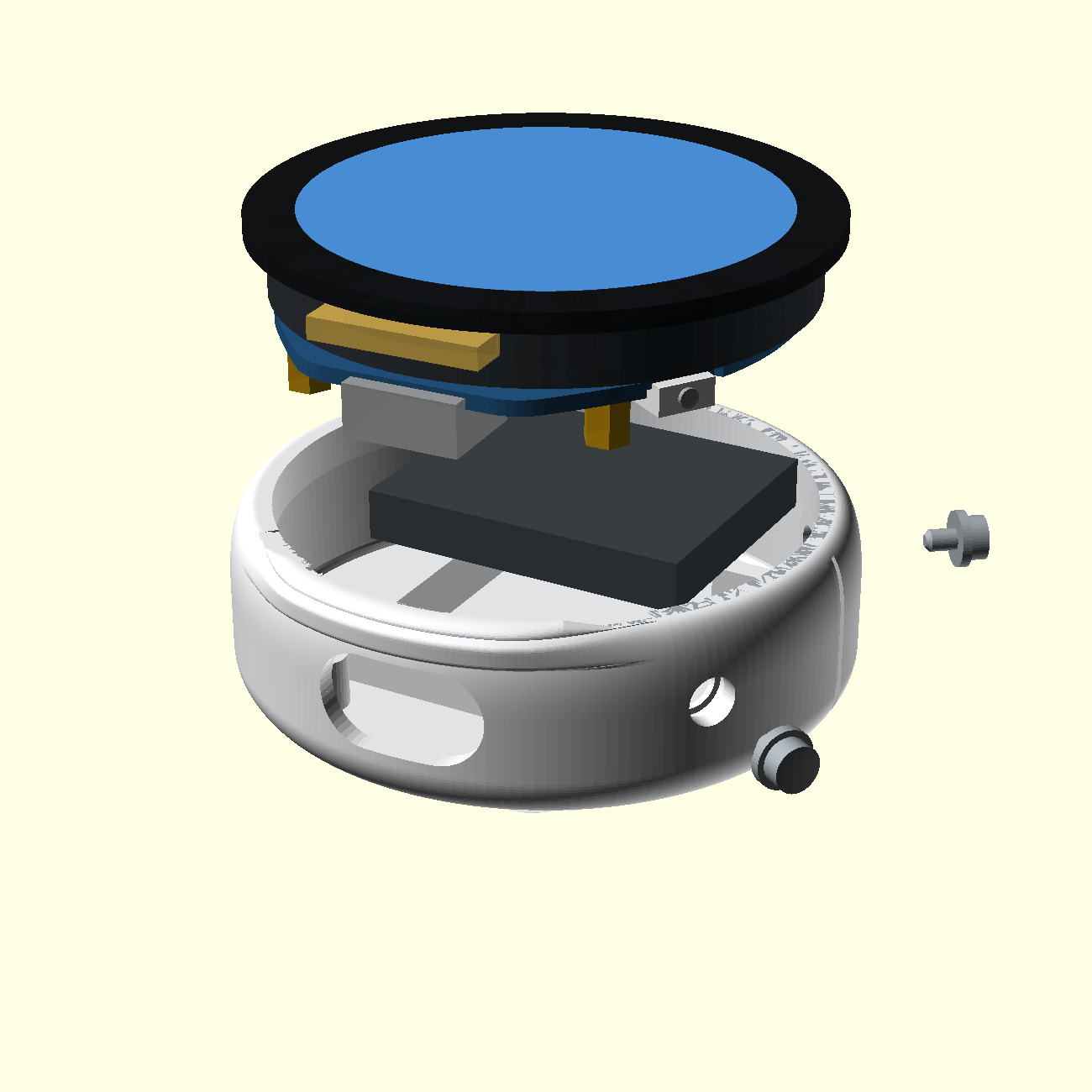
- ESP32-S3-Touch-LCD-1.46B: a round 412×412 IPS panel with touch on the same controller, two side keys (PWR and BOOT) and a motion sensor
- No custom circuit board. The walk loop drives the panel at about 15 frames a second
- The software draws a 103×103 picture and scales it four times, so every dot is a crisp 4×4 block
- A desktop window and a browser build run the same code as the board
The shell
The ball is the picture
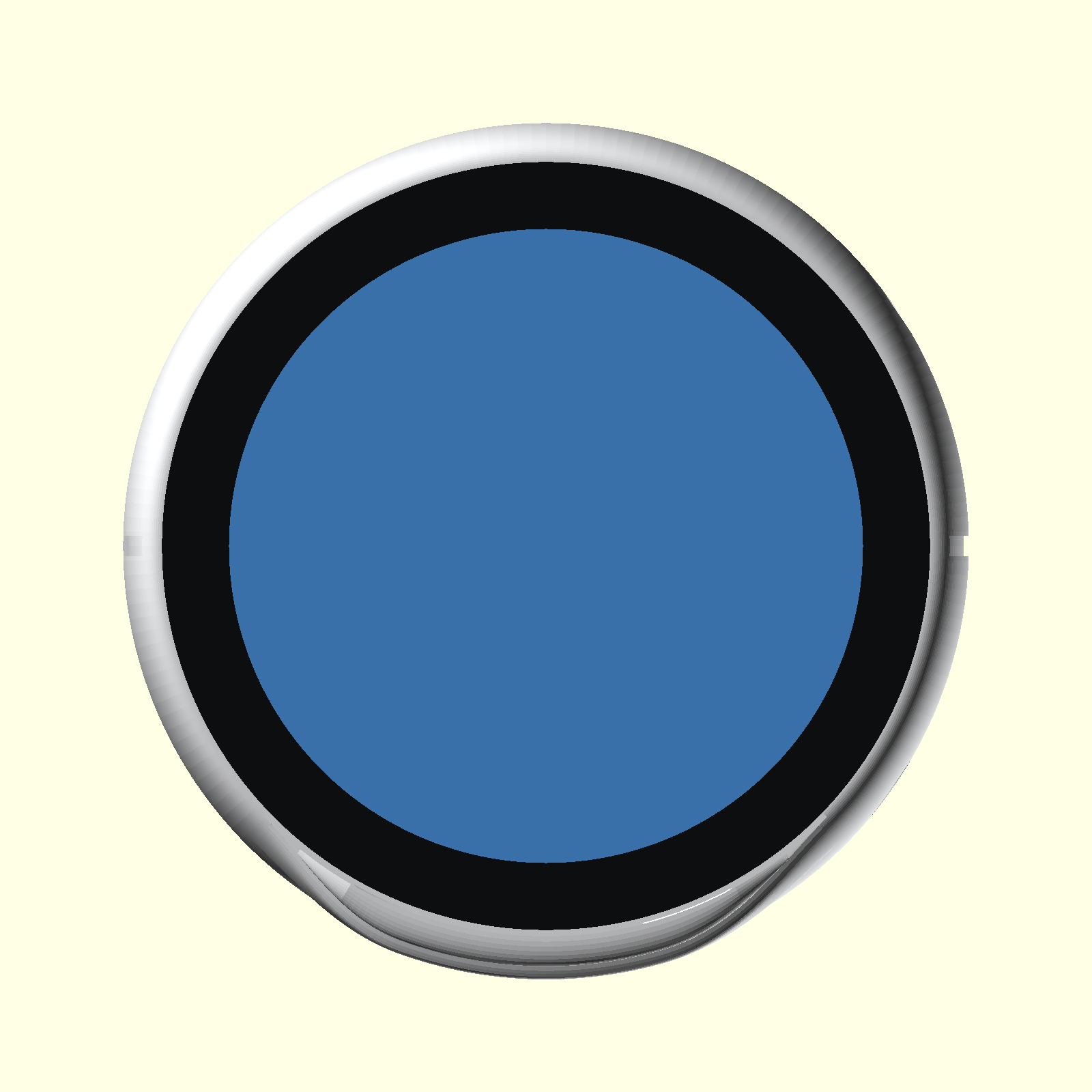
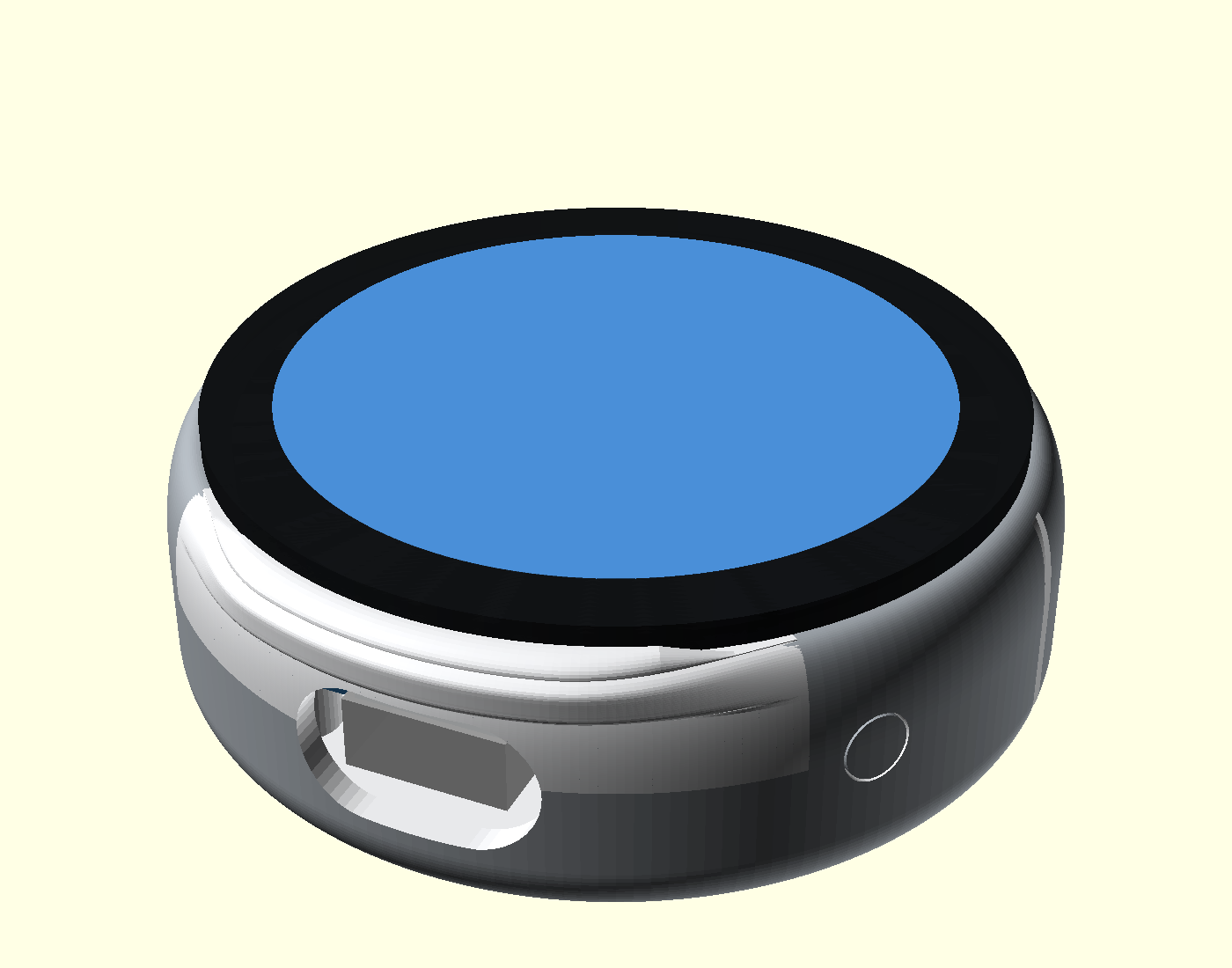
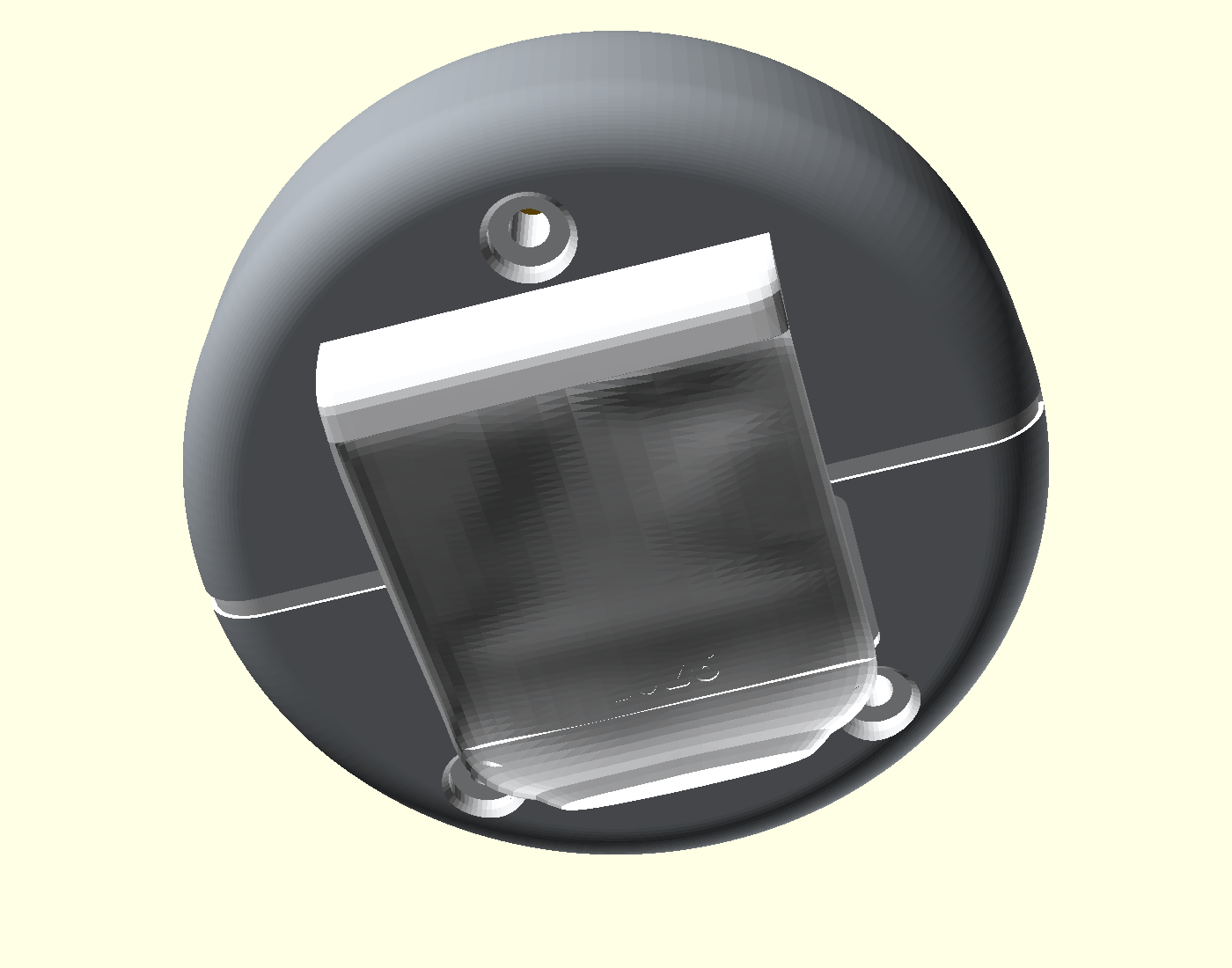
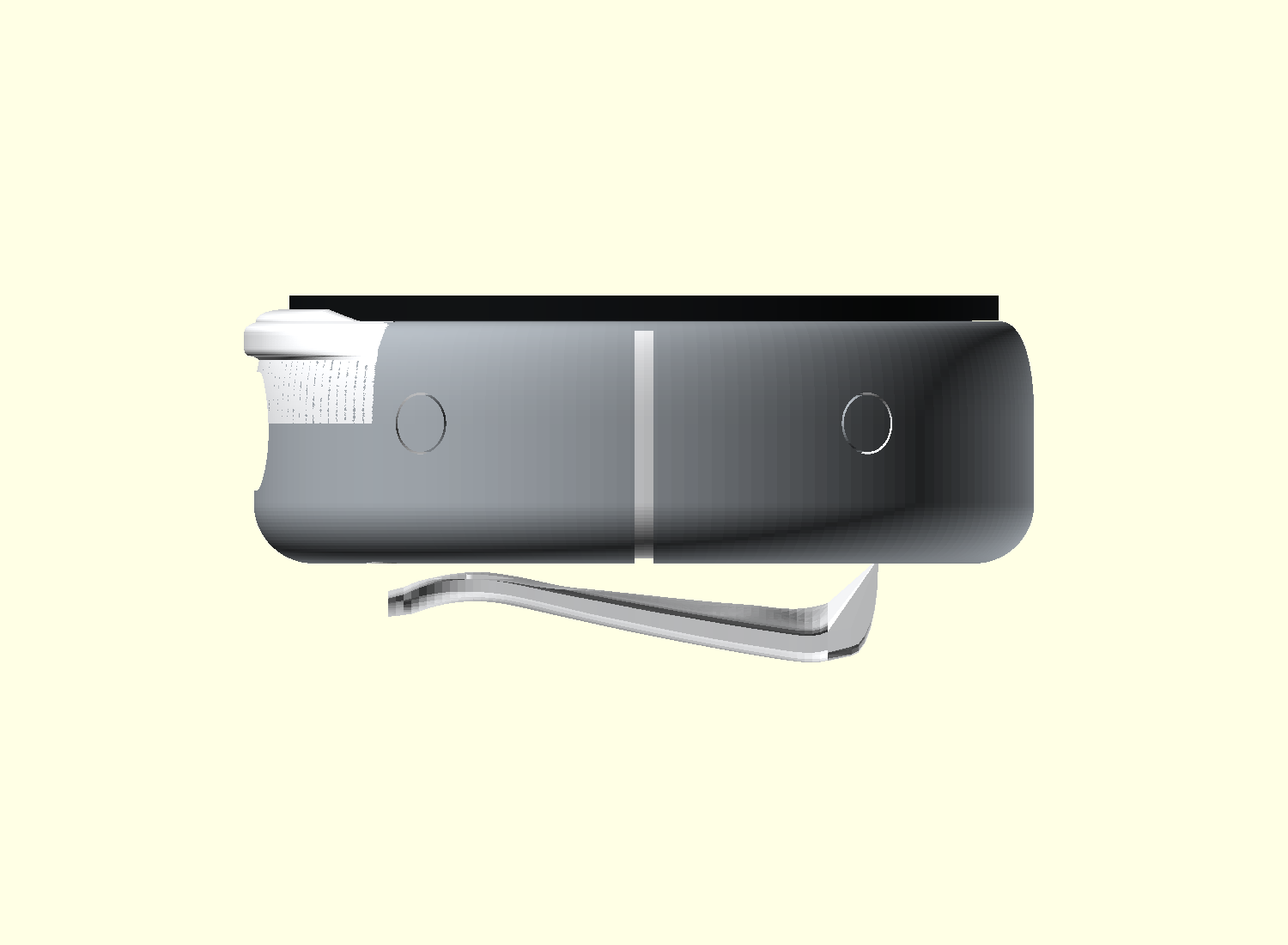
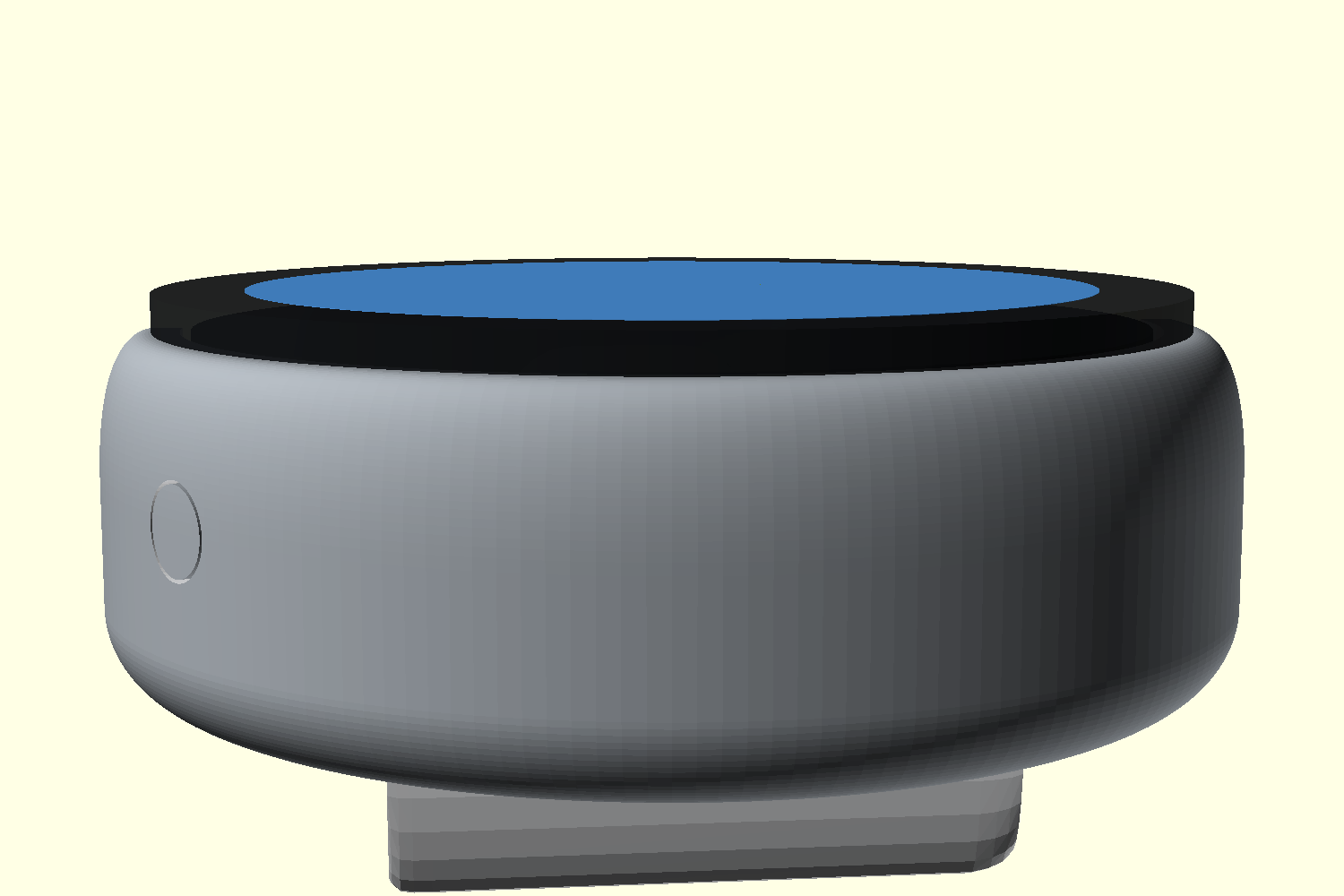
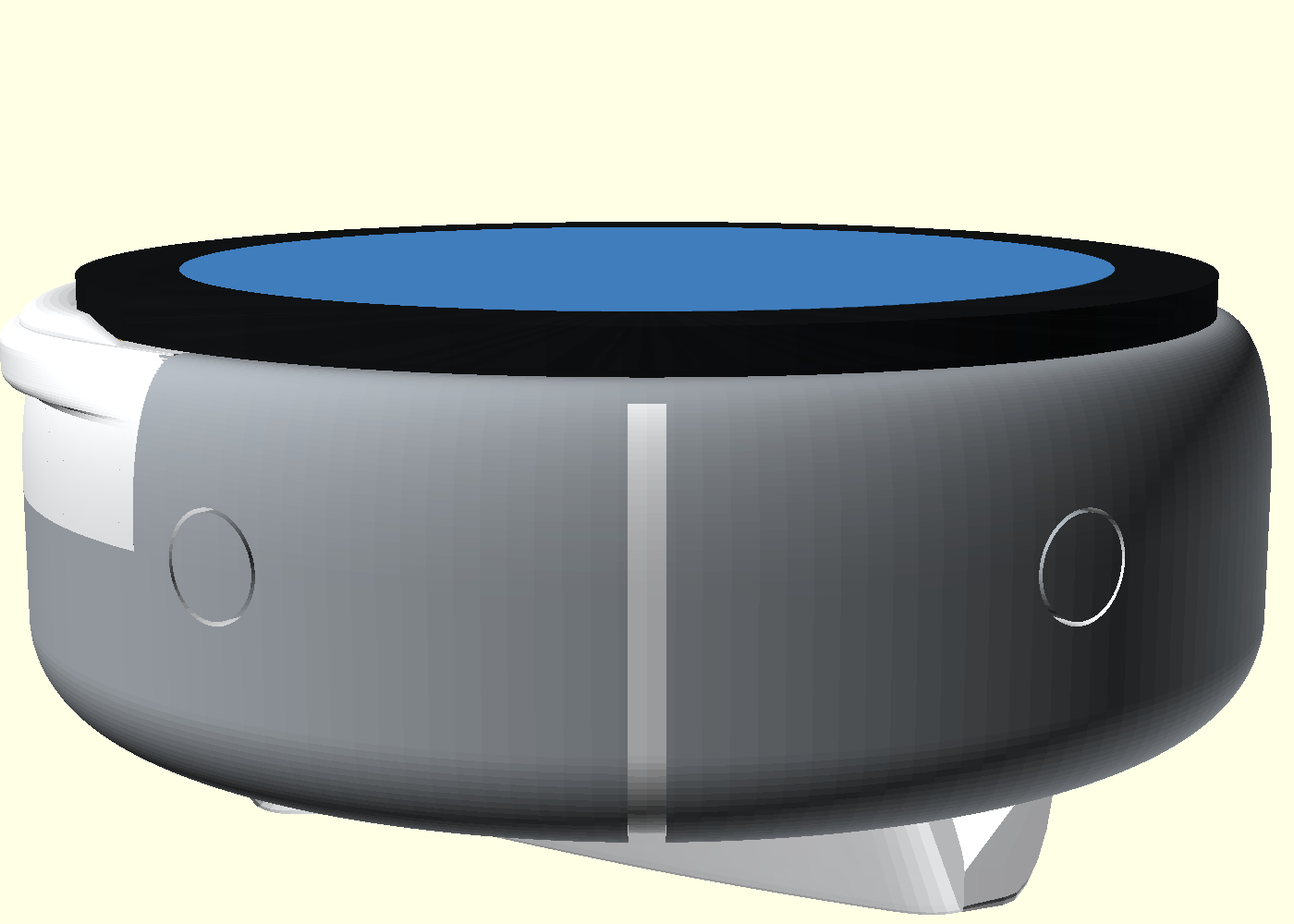
- One printed cup, ⌀51.8 mm at its widest; the board drops in from the front and the glass is the whole face
- Three M2 screws through the back into the board's own standoffs. Nothing glued, nothing snapped
- Fit checked against all 420 solids of Waveshare's own 3D model, which caught two clashes under a fiftieth of a millimetre
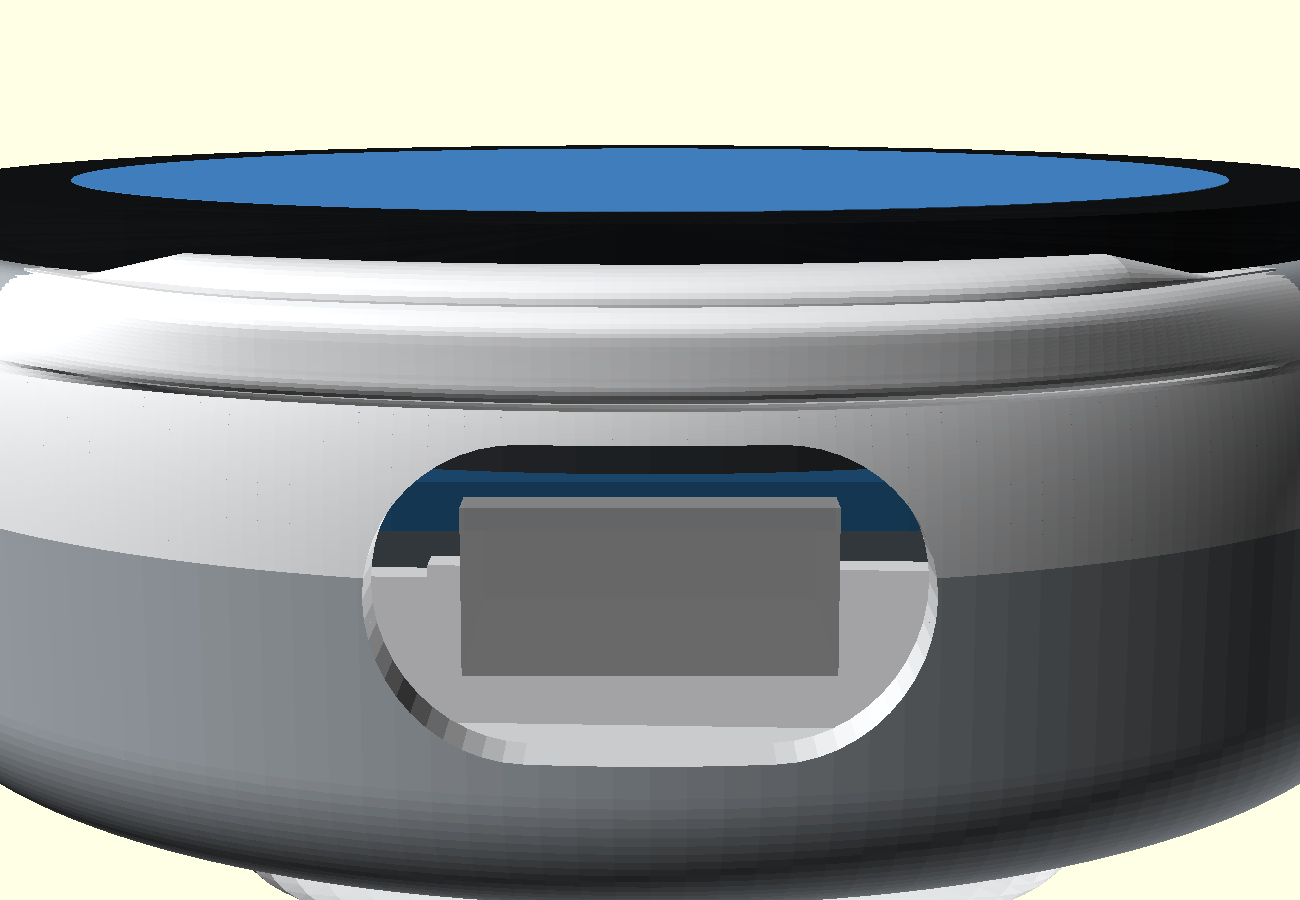
- Two printed side keys, a red and white paint line, and a belt clip shaped from a 3D scan of the original's
Battles and gym leaders
Generation 1's rules in a 3D stadium, with three lanes on top.
The engine
Gen 1 rules, one twist
- Damage, types and accuracy follow Pokémon Red and Blue, with no floating point, so the walker, the browser and the server get the same result to the byte
- The twist: three lanes and a secret stance every turn. Jump the wrong way and an attack lands for double
- One command screen: four moves, where to aim, where to stand. Leave it alone and it plays the AI's choice
The stadium
A camera that moves
- A real 3D camera orbits the field and swings behind whoever is acting
- Surf, Earthquake, Thunderbolt and Thunder get their own effects painted into the stadium. Every other move plays the cartridge's own animation
- Critical hits become a beam clash in the middle of the field; knockouts crack the wall
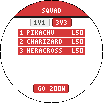
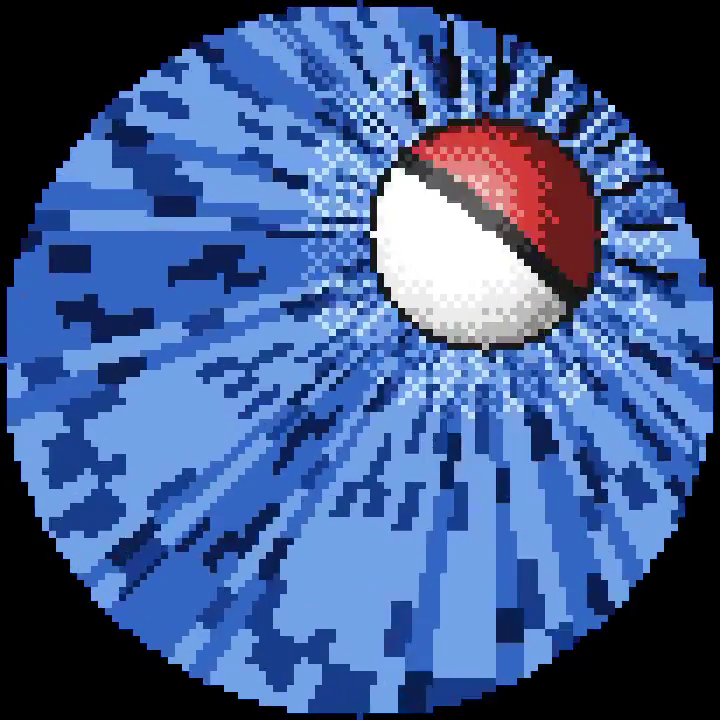
- Pick a squad first: 1V1, 3V3 or 6V6, in the order you tap them
Gyms
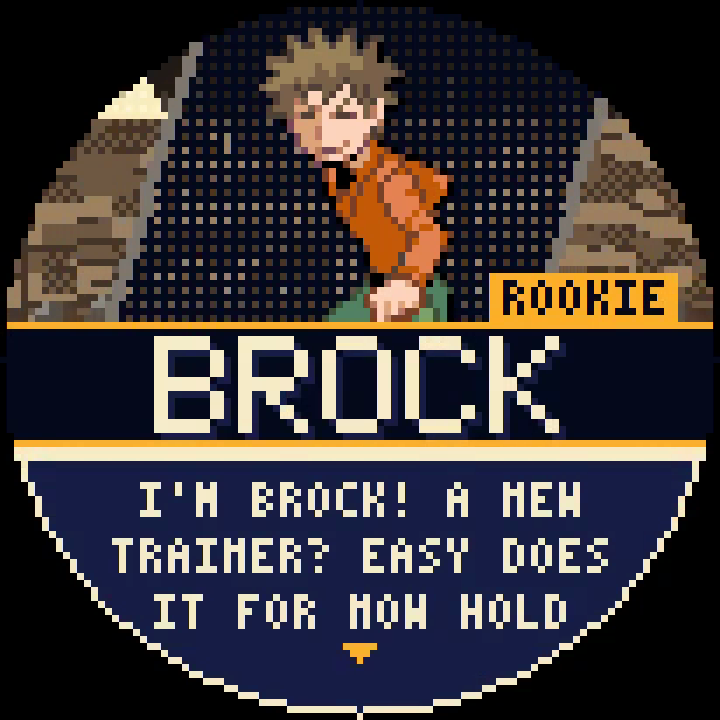
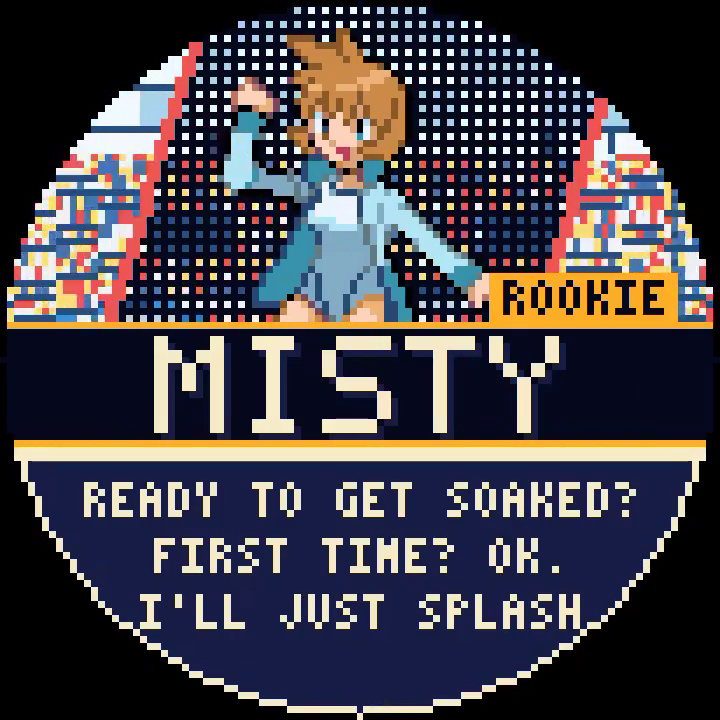
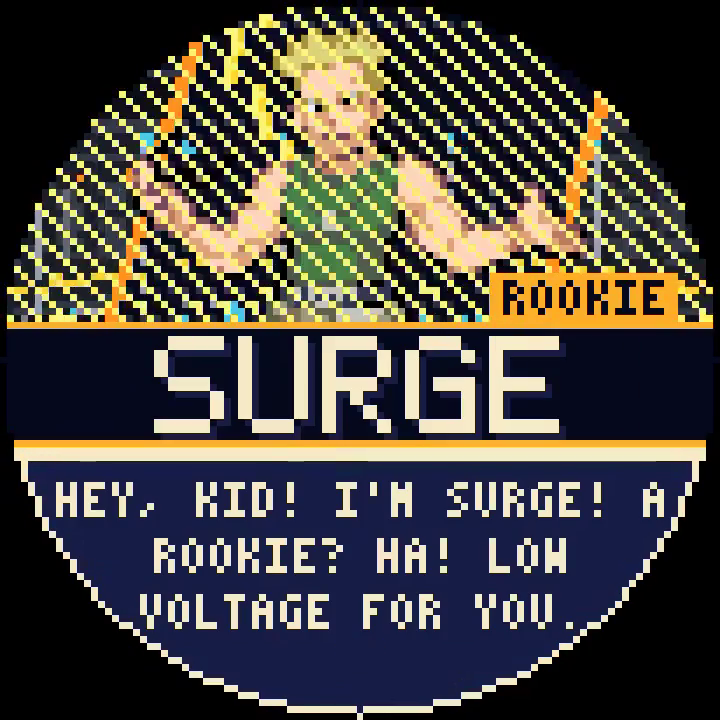
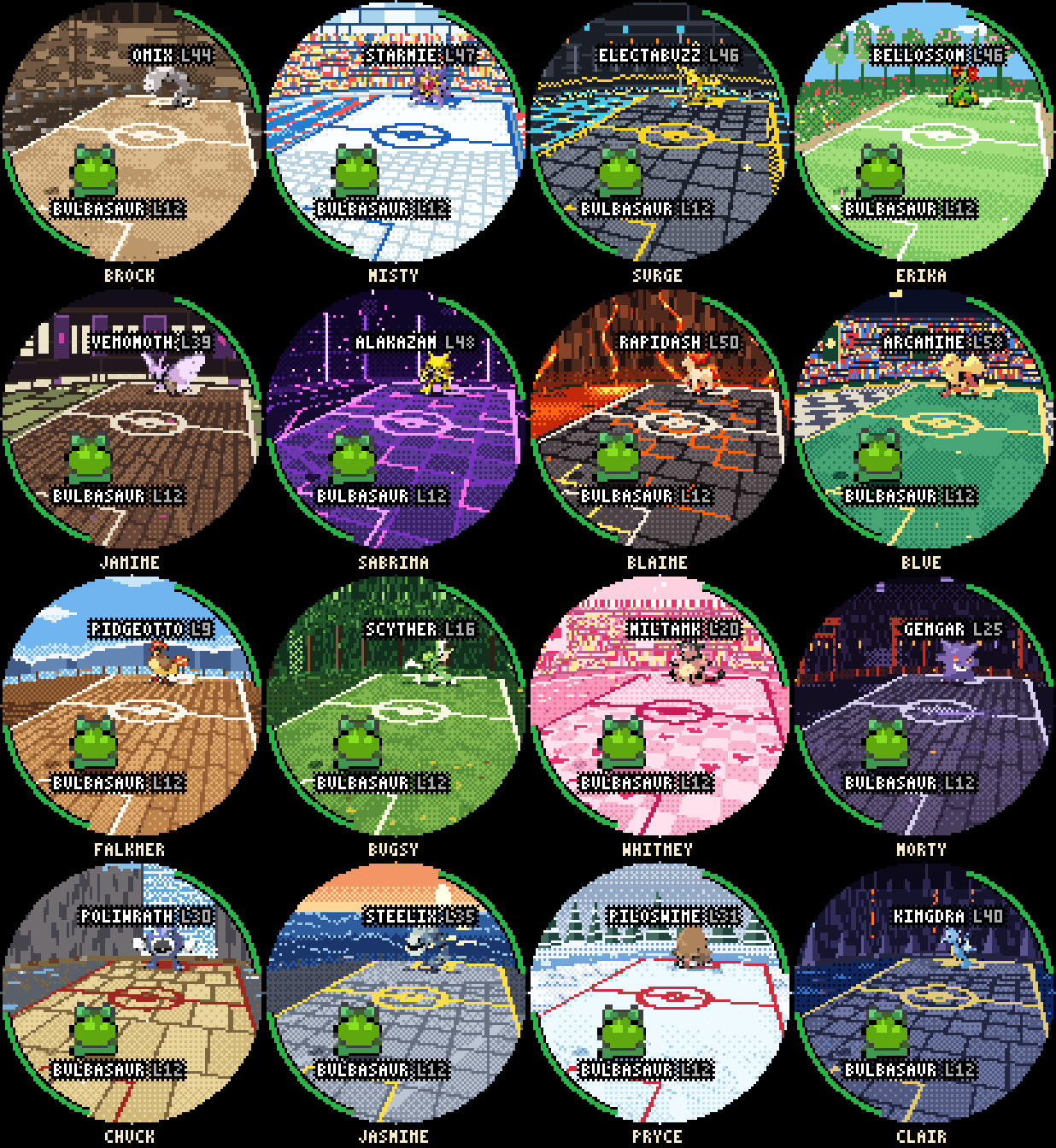
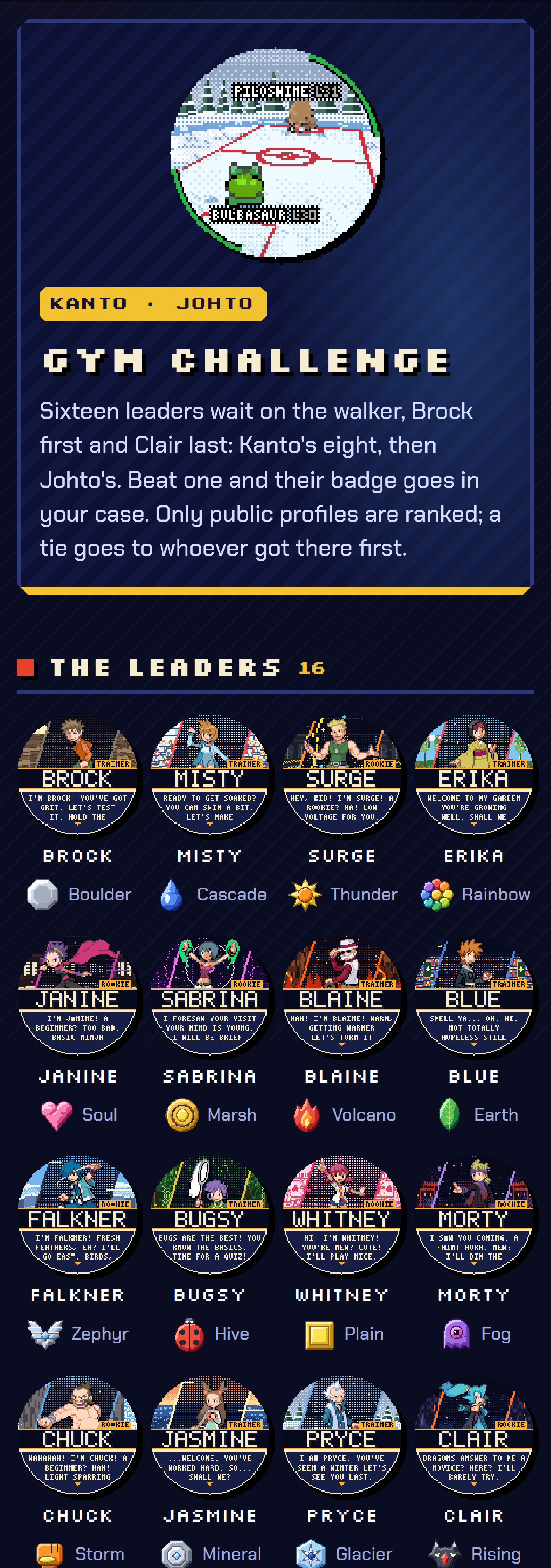
Sixteen leaders who read your team
- Gold's sixteen: Brock to Blue, then Falkner to Clair. 200 Watts a challenge, win or lose
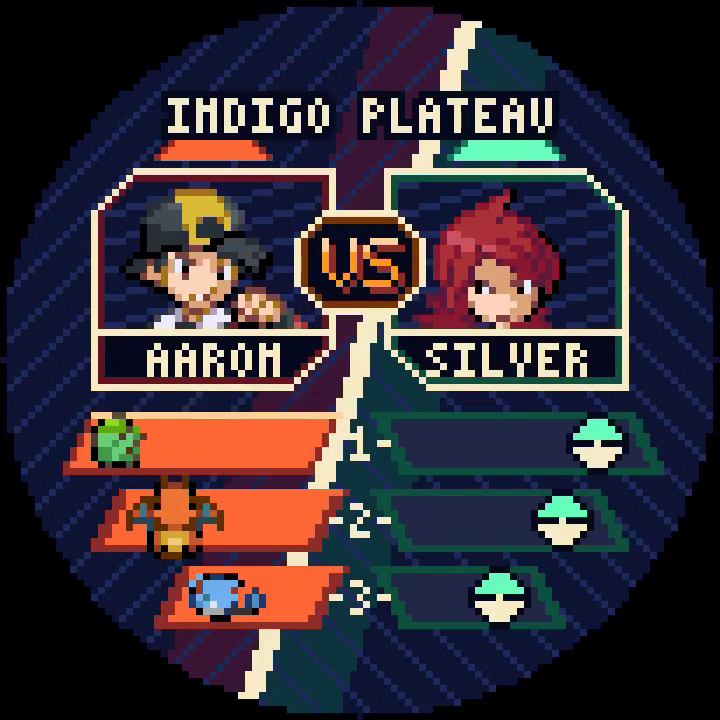
- The leader sizes up your team and builds one a little ahead of it. Challengers win about four times in ten
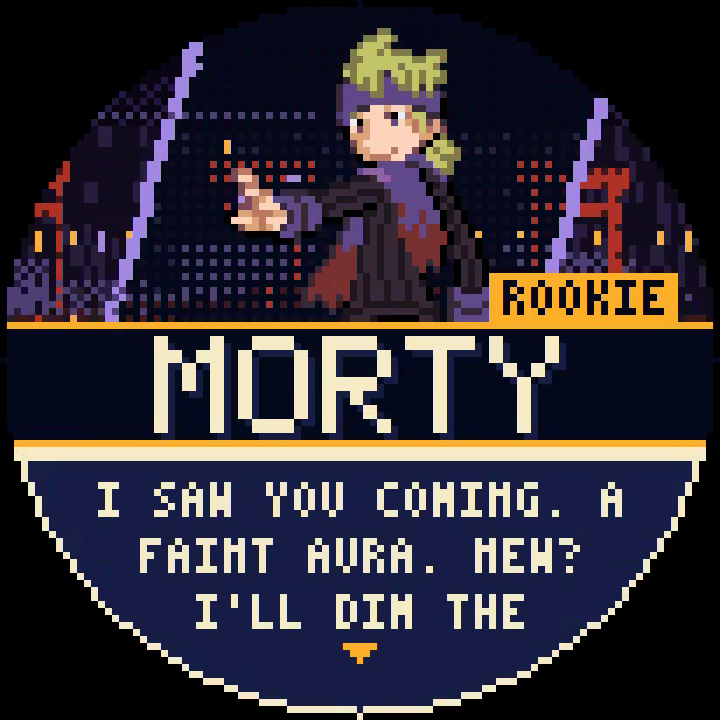
- Each leader has an arena of their own, an entrance, lines written for this, and a badge drawn for it
The wild
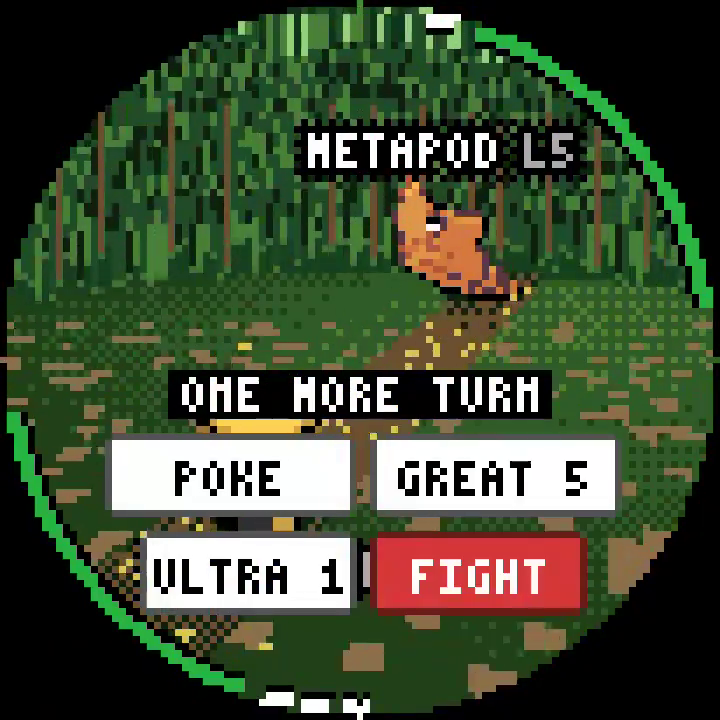
Nine areas to catch in
- Real wild tables from Gold and Blue, under names of their own, unlocked by steps, badges and catches
- An encounter every 25 steps, or search for 2 Watts. Catch with Gold's catch rules and wobbles
- Shiny odds you choose: 1 in 8,192, 1 in 4,096 or 1 in 512. A Shiny Charm for all sixteen badges
- A PC of eight boxes of thirty, and Gold's 57 TMs and HMs
The open world
A whole region to walk, being built now.
The region
Sixteen gym towns round a park
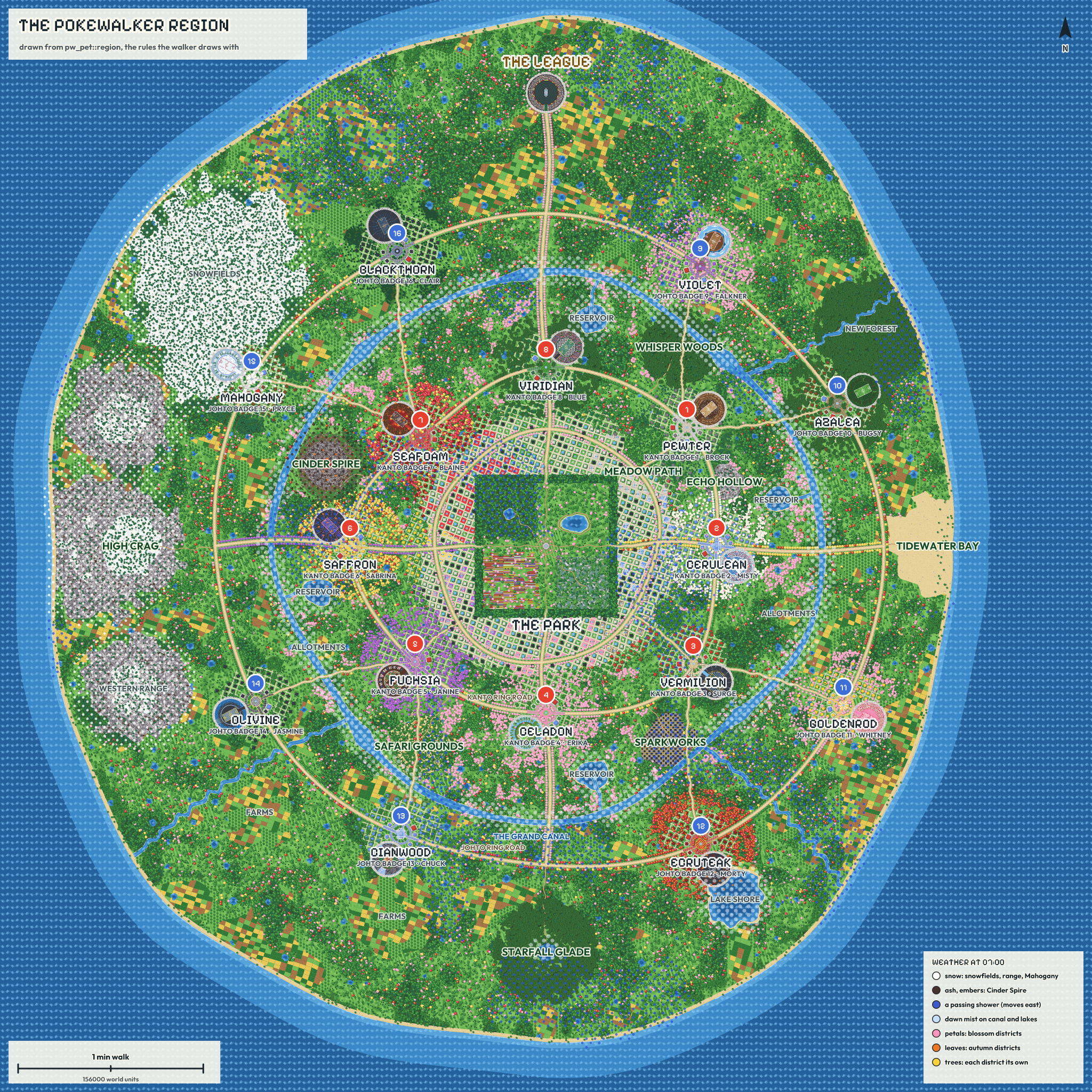
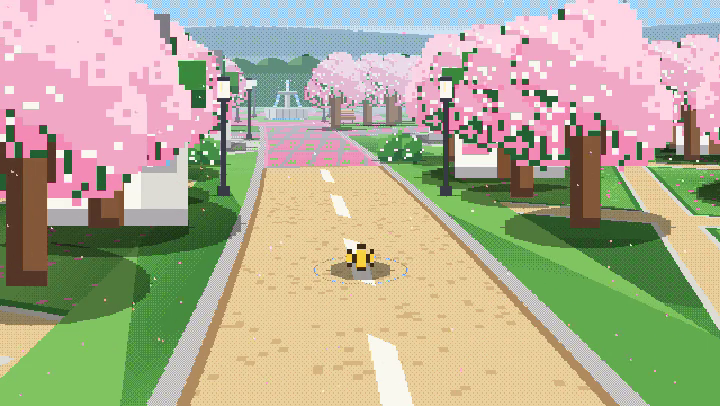
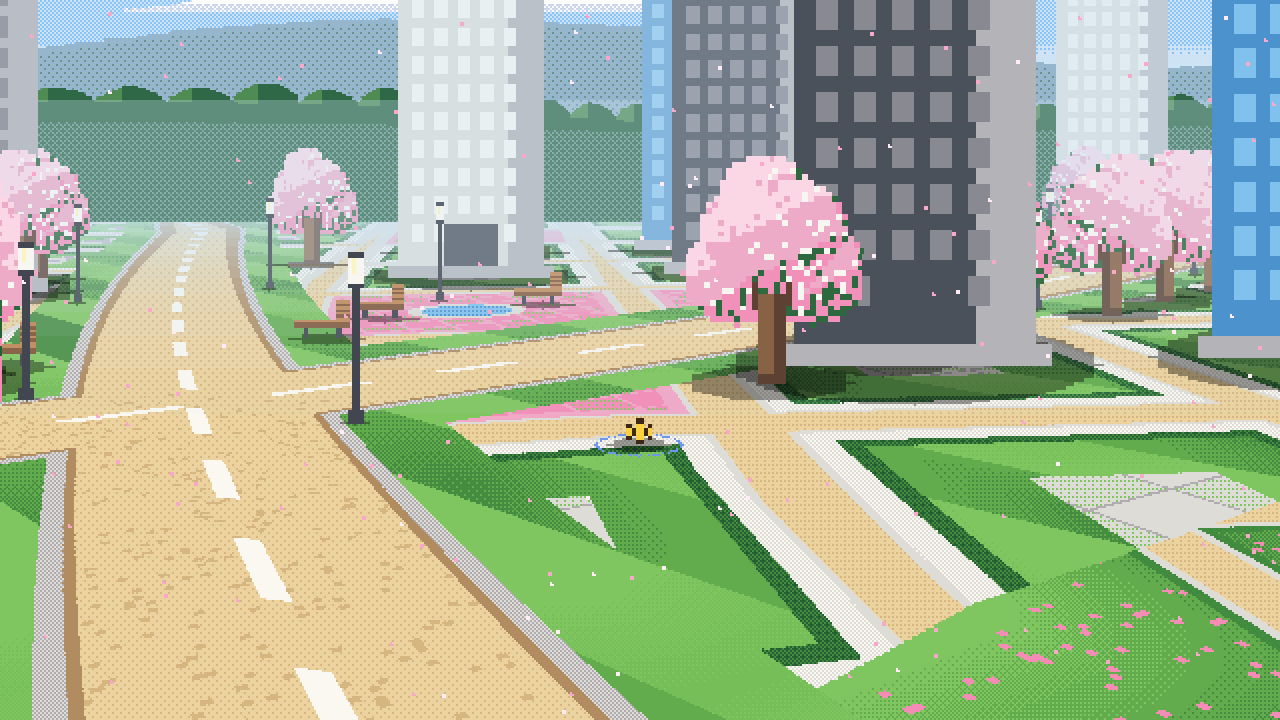
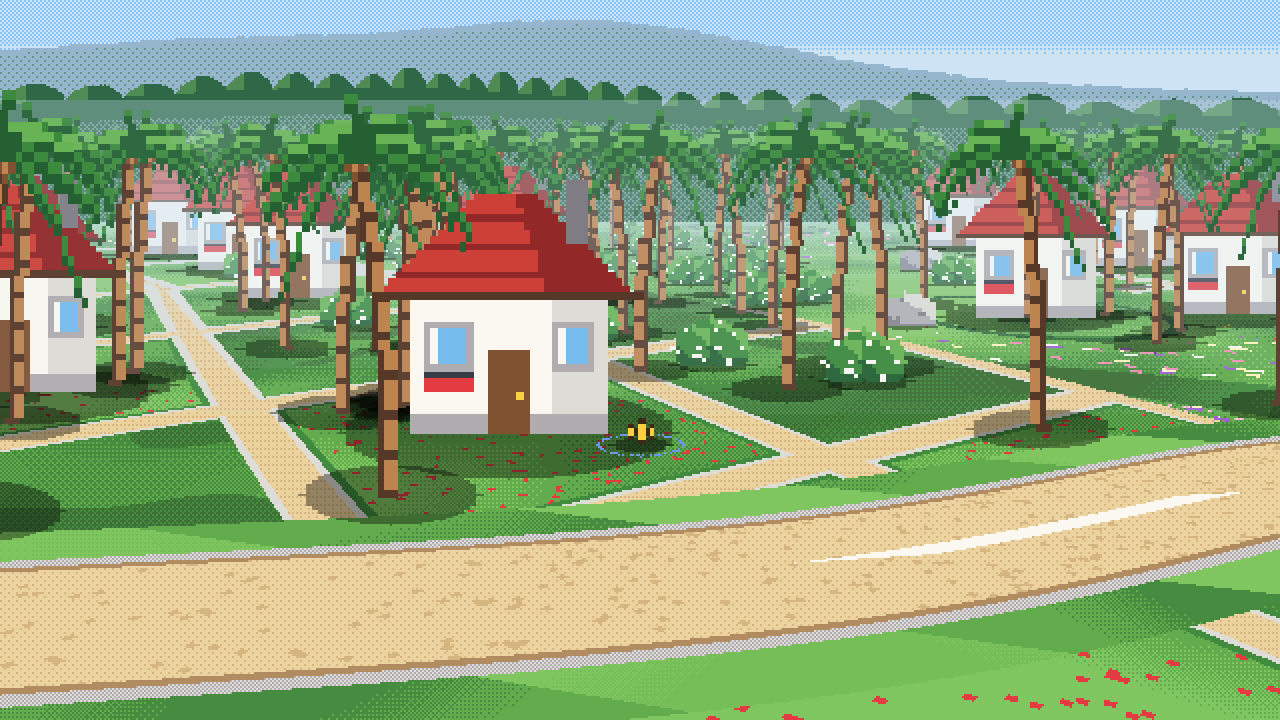
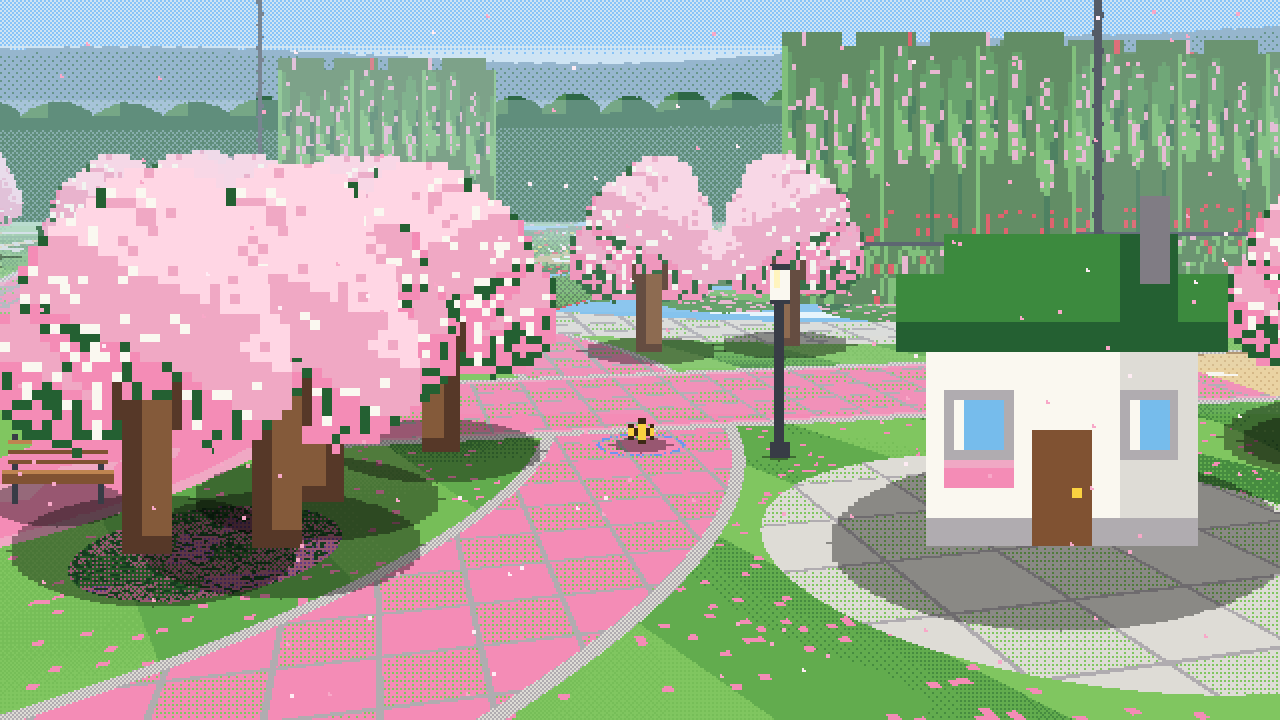
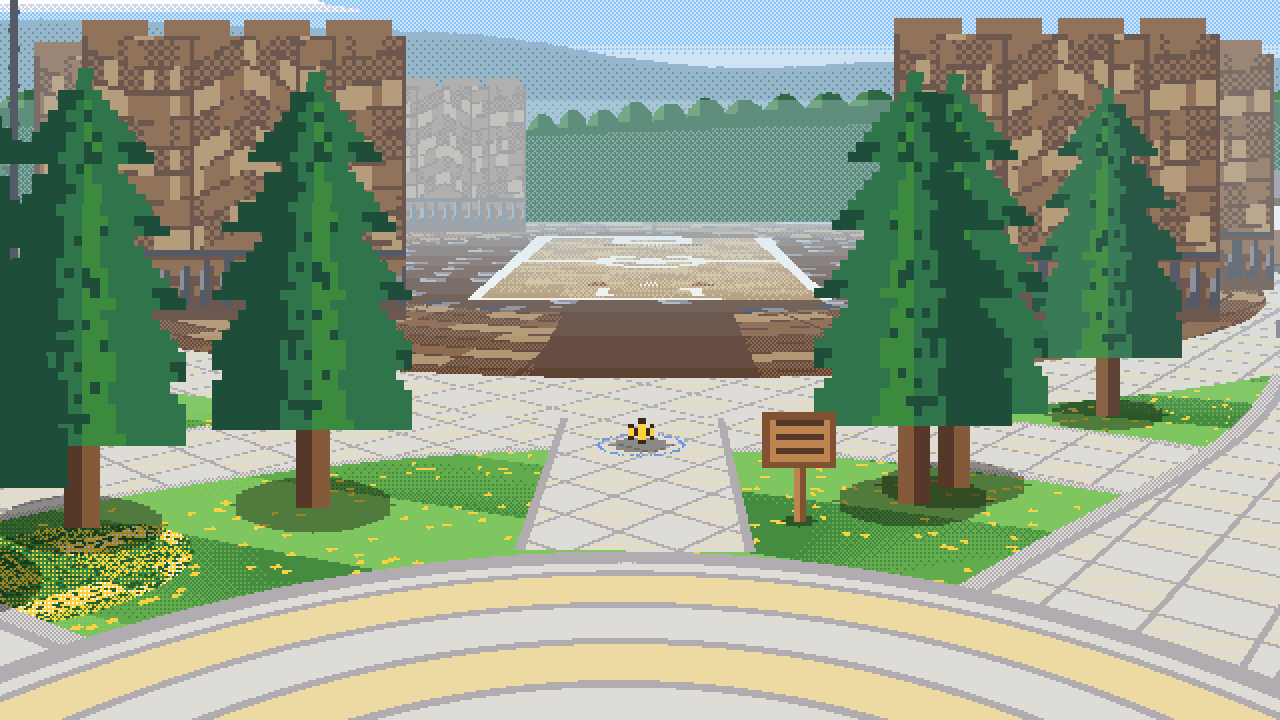
- One island region: the park and a downtown at the centre, sixteen gym towns round it, Kanto's and Johto's, and the League to the north
- An organic layout of districts and neighbourhoods, joined by boulevards and a grand canal
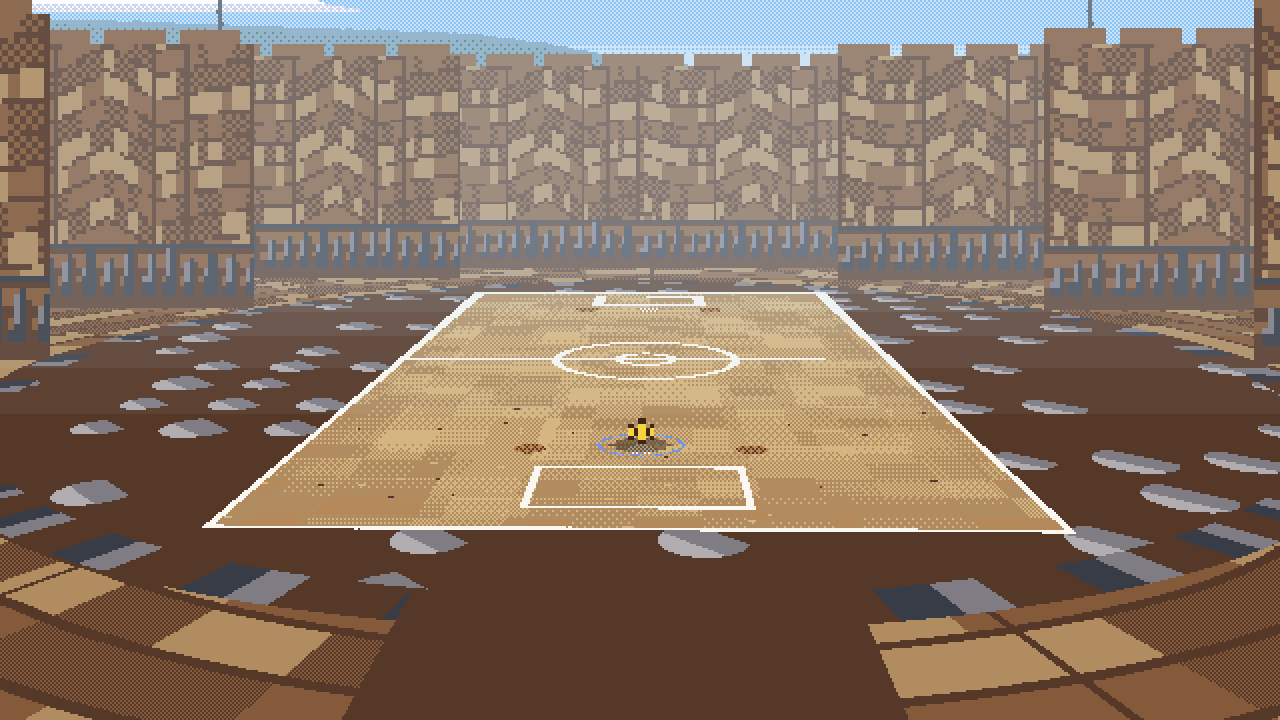
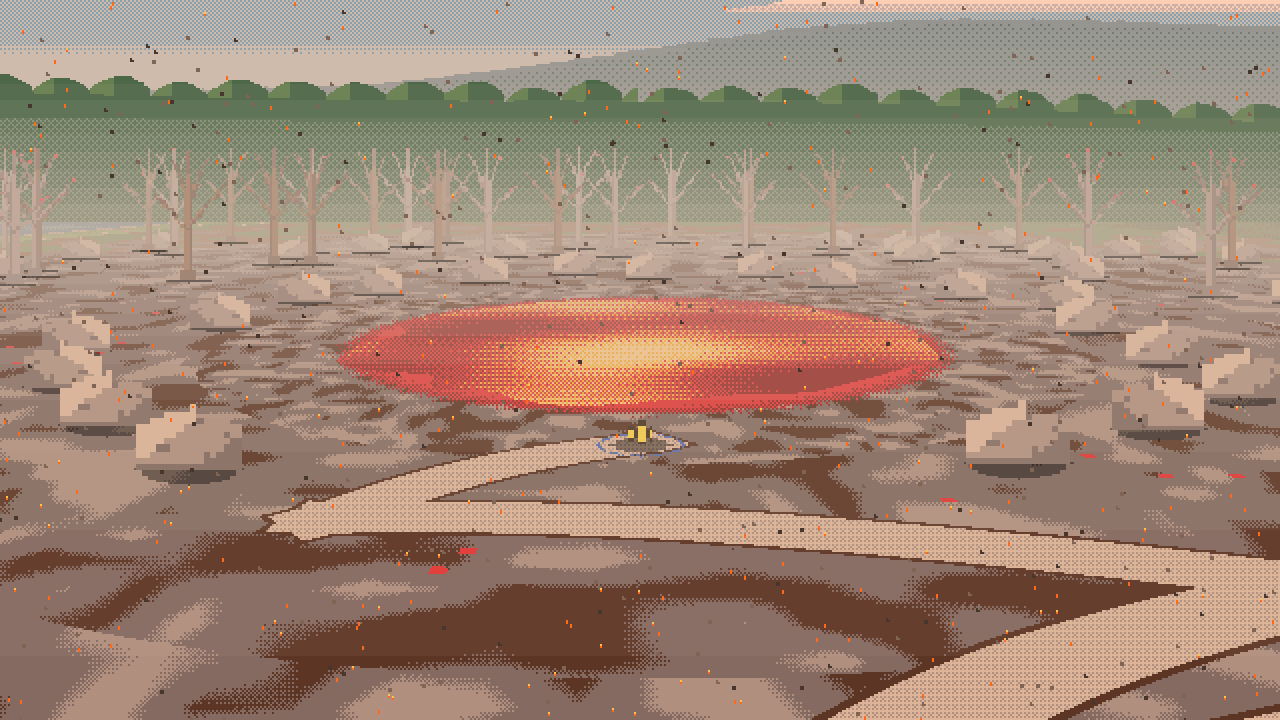
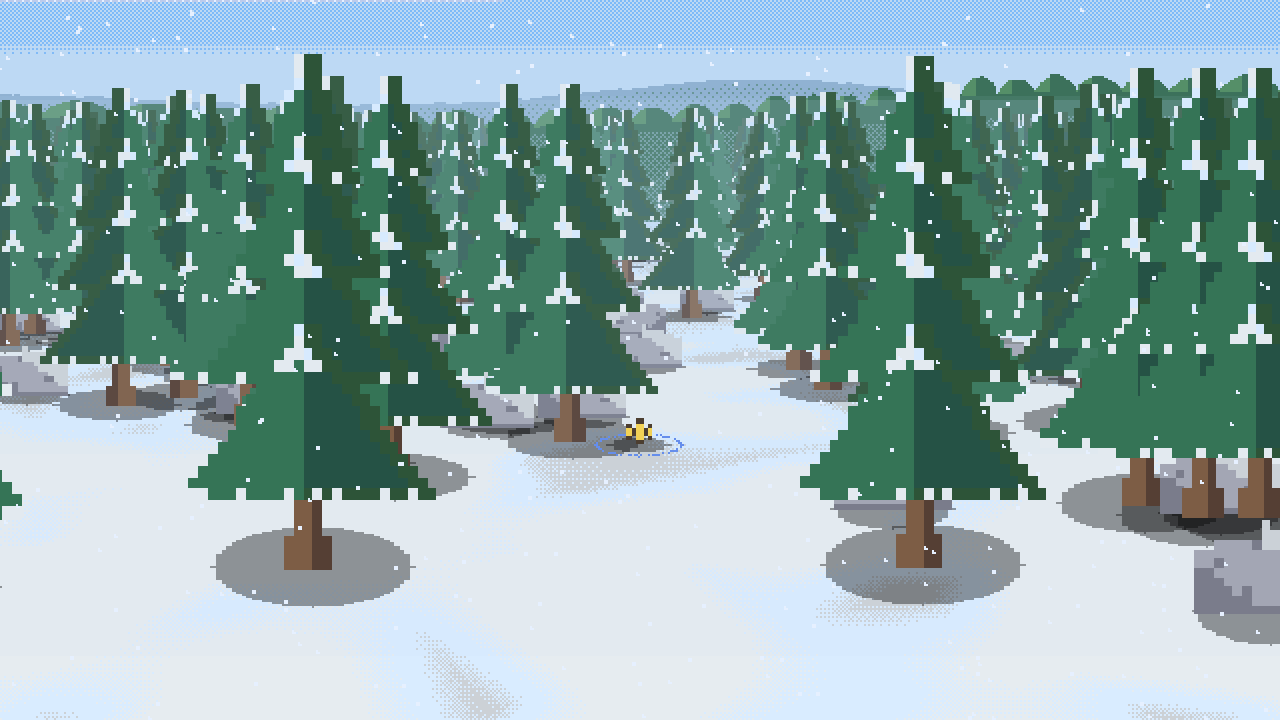
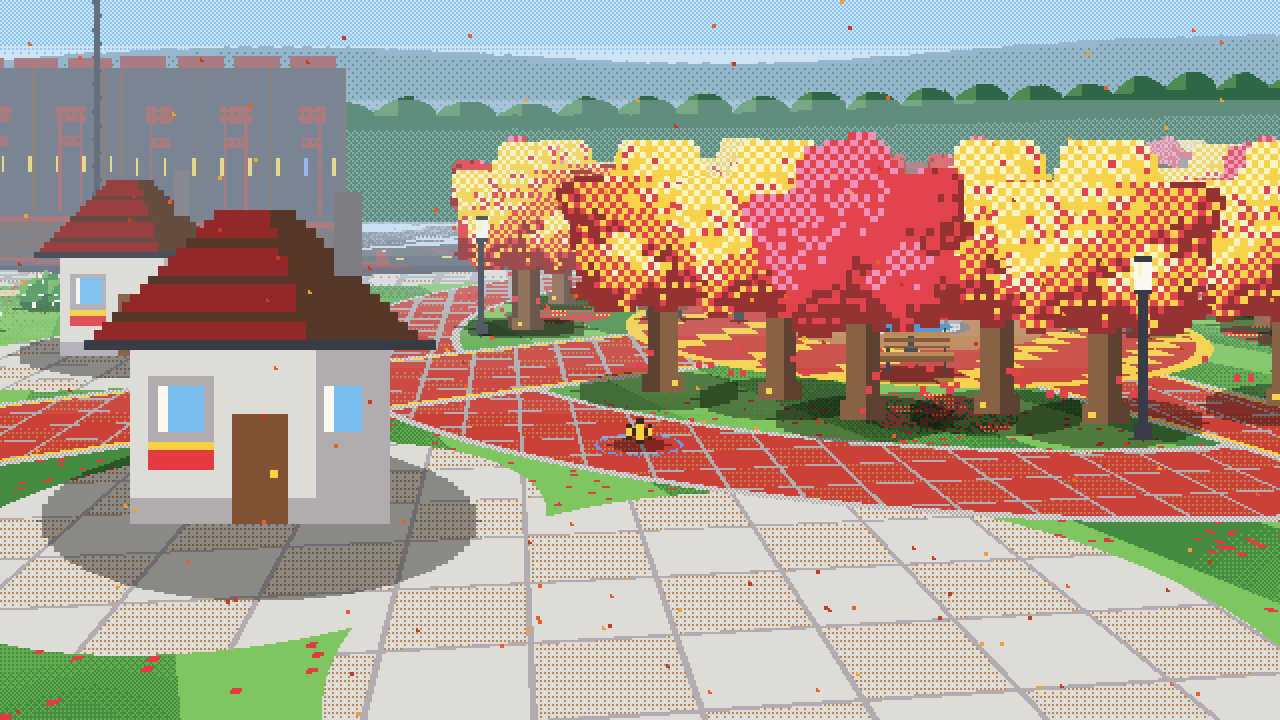
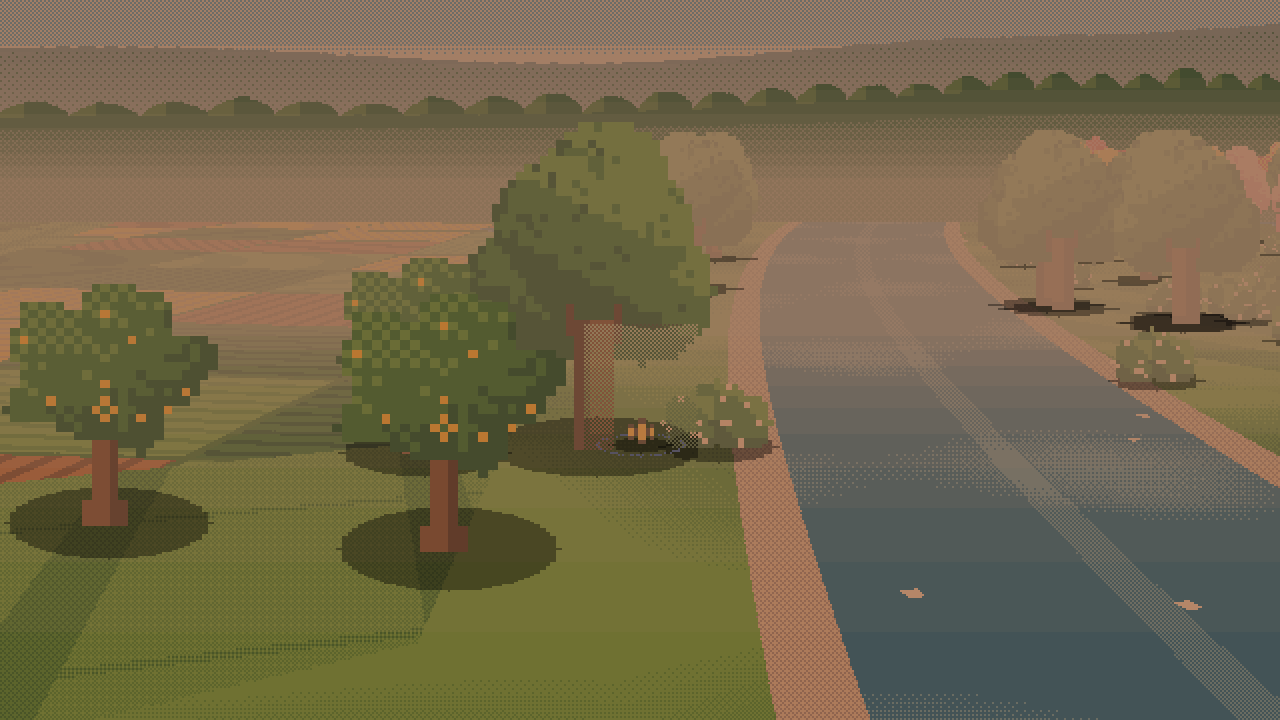
- Every gym town has a full-size arena; each district grows its own trees, from cherry blossom to autumn reds and snowy pines
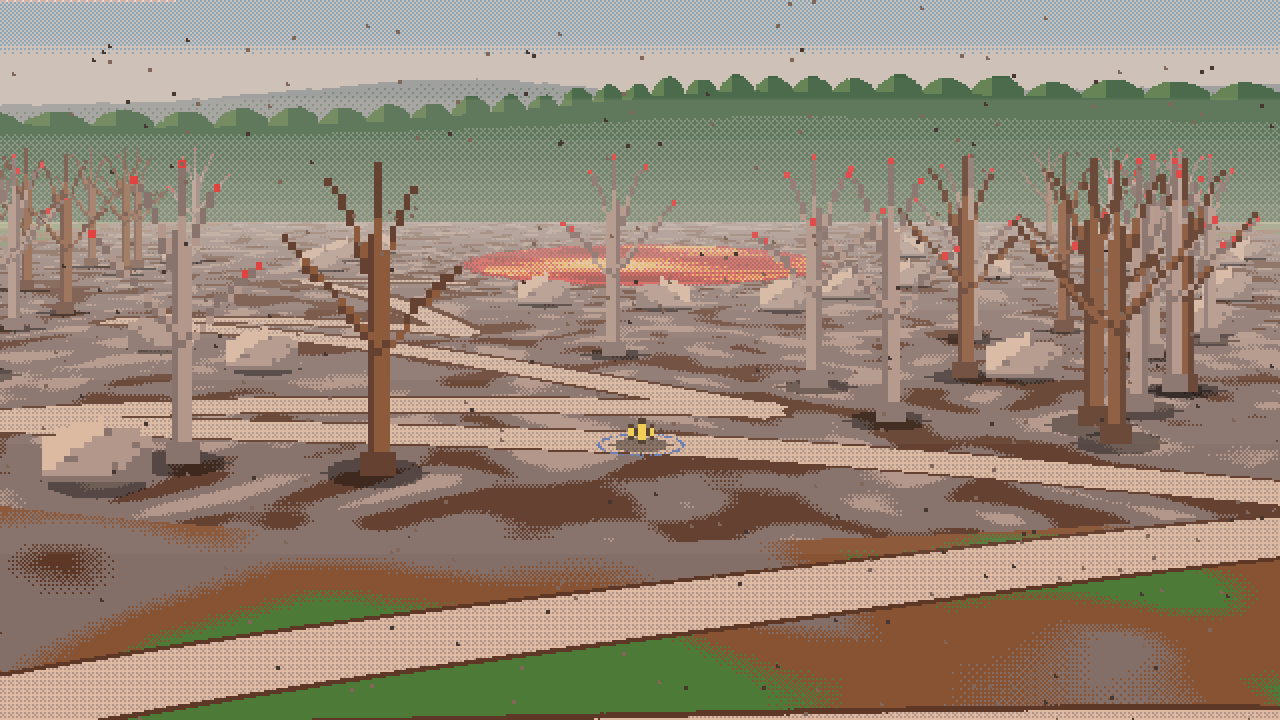
- Weather and wind: petals blowing down the boulevards, snow over the snowfields and Mahogany, ash and embers round Cinder Spire, passing showers and dawn mist on the canal
Status
A work in progress
- The layout, the arenas, the weather and the wind all exist in the world engine
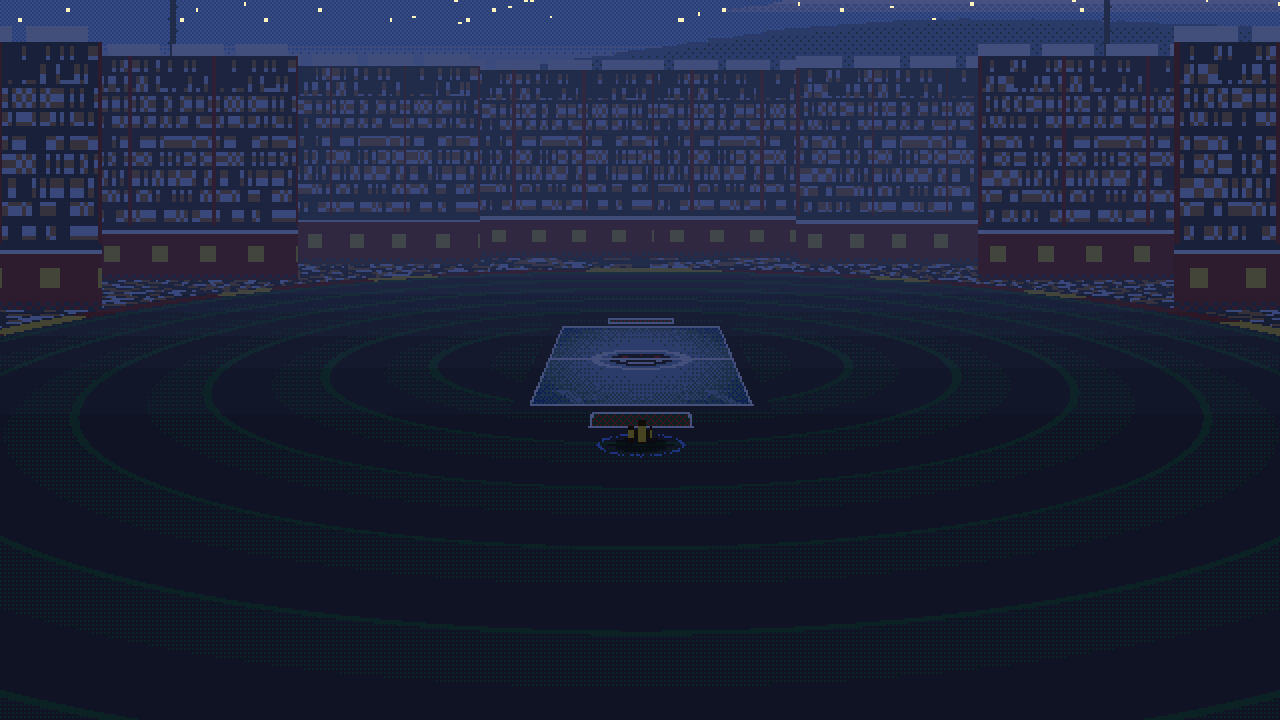
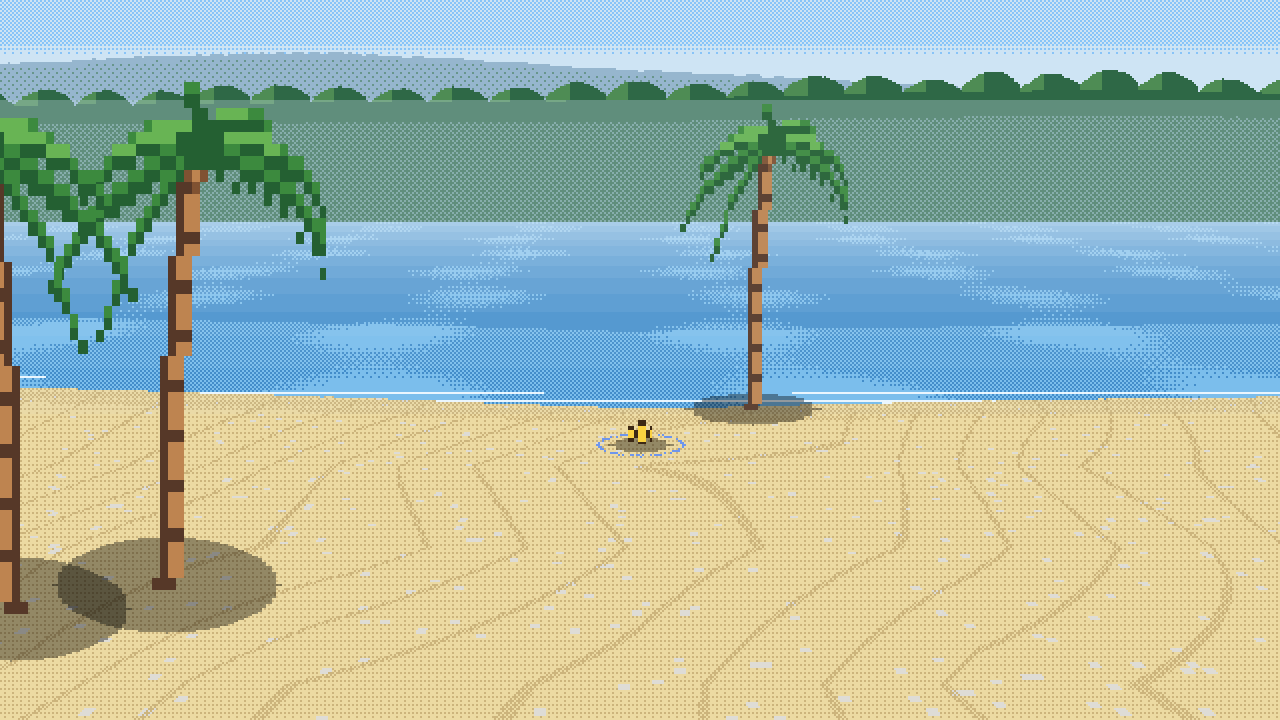
- These are renders from it on a desktop, not from the walker. The region isn't on the device yet
- Today's shared park is the piece of it already running, online and off
The portal
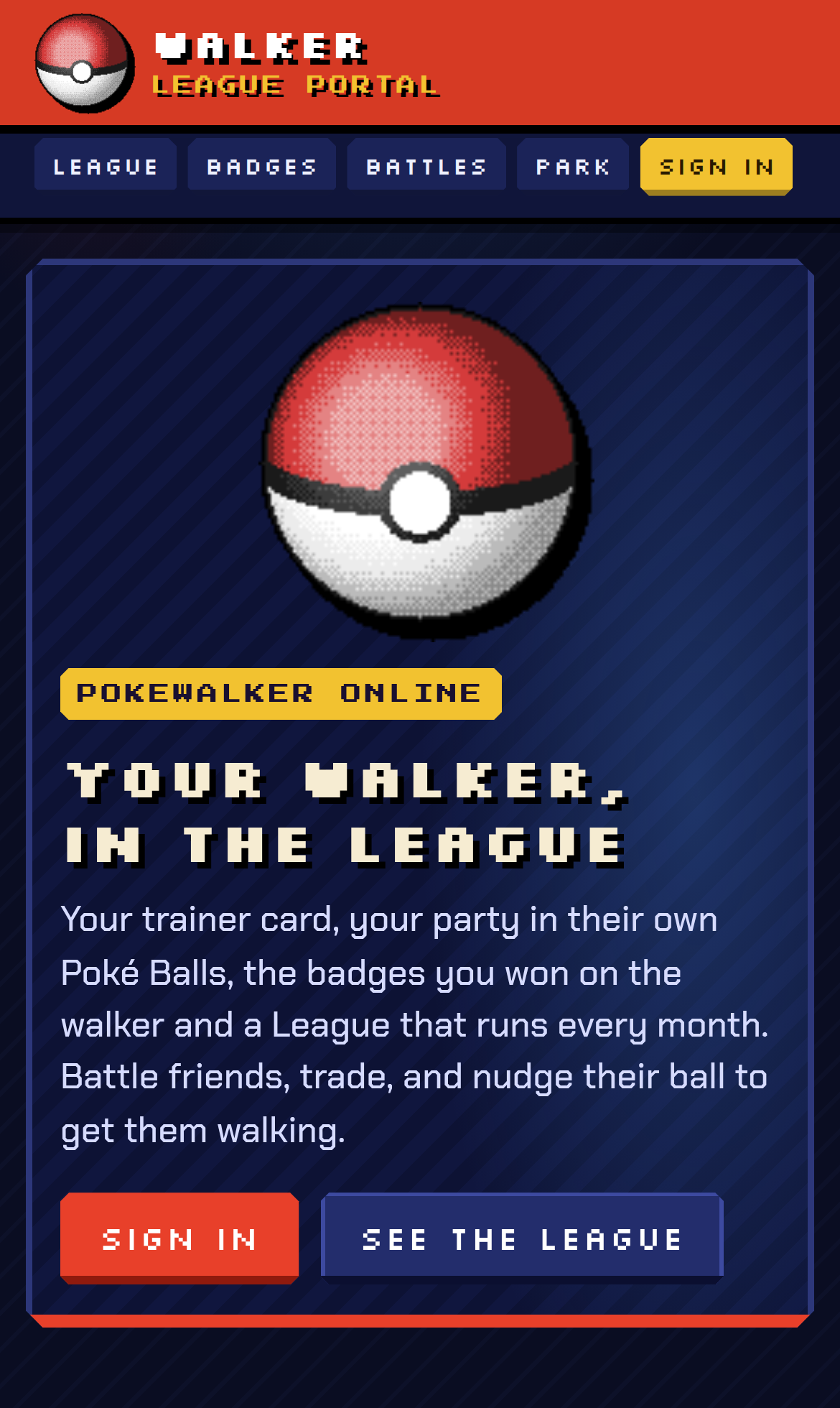
Your walker, on the web: friends, a league, replays and trades.
You and your friends
Cards, codes and pokes
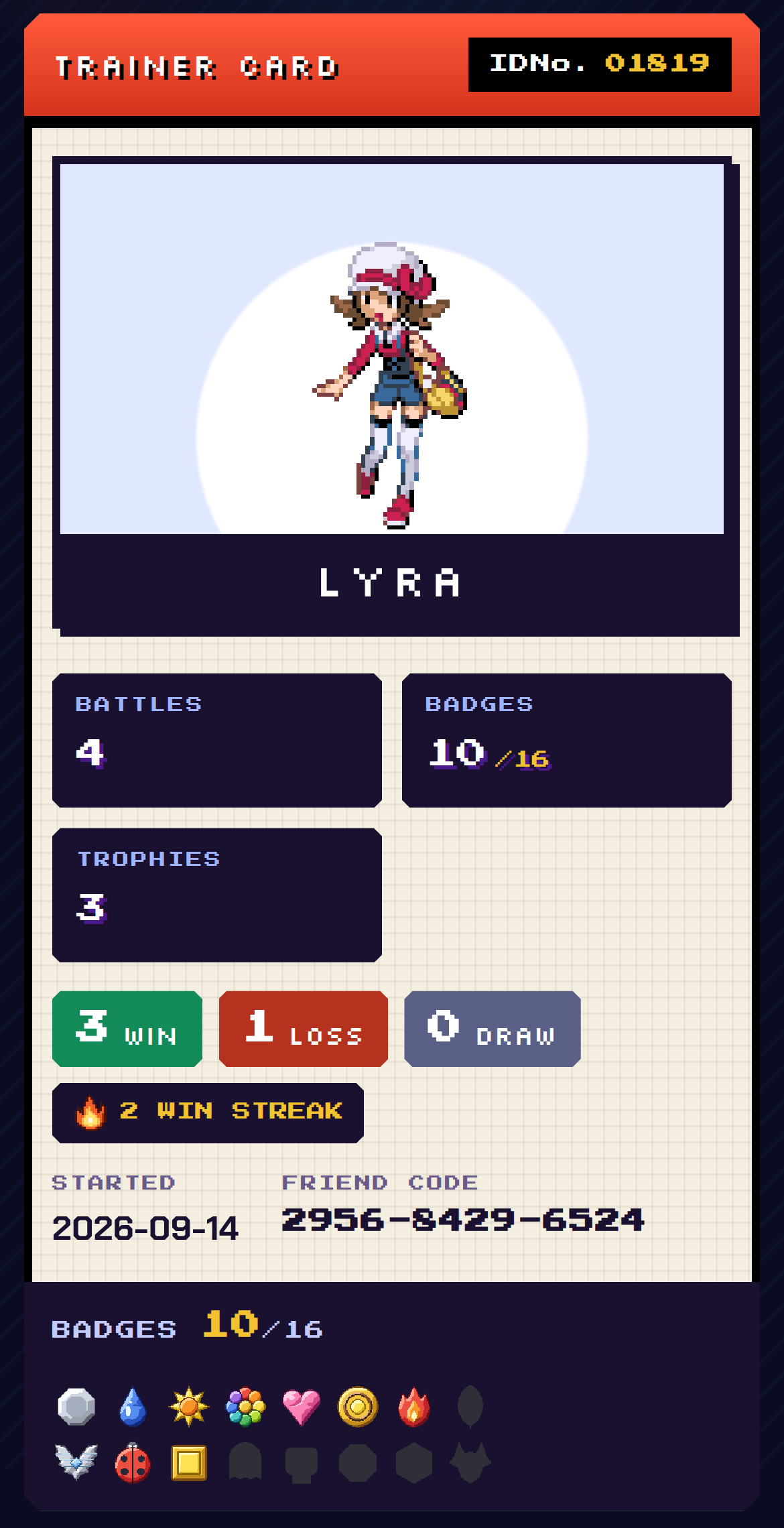
- A trainer card with your team, record and badge case, public, friends-only or private
- Friends by a twelve-digit friend code
- Poke a friend's ball, or challenge them: the server plays both teams' tactics and your walker replays the fight
- Edit your team, names and settings from the site; they reach the walker on its next sync
The league
Monthly seasons, kept replays
- A season a month, a table for each format: open, level caps, and a balanced level 50
- Every battle is kept as a replay of about a kilobyte, played back in the browser by the walker's own stadium
- Trophies come home as decorations for the pet's room
Live
Park, races, trades, backups
- The live park, and live race rooms that anyone can watch
- Trades between two trainers, held in escrow until both agree
- Backups of the walker, the newest ten kept, restored with two presses on the device
Walking
Steps become Watts, and Watts pay for everything else.
The face
A ball that opens on your lead
- At rest it is a lit Poké Ball you can turn with a finger. Double-tap and it opens on the walking face
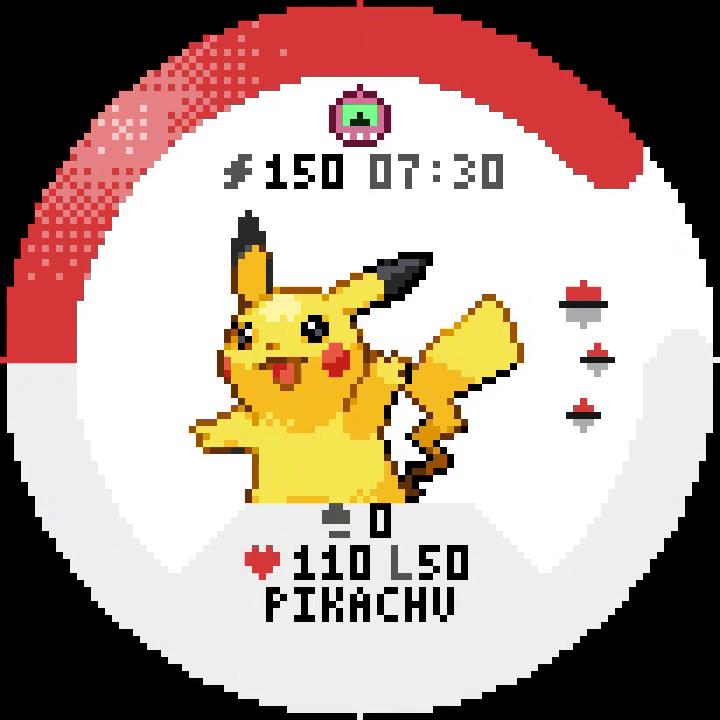
- The face shows your lead Pokémon, its level and health, the day's steps, Watts and the time
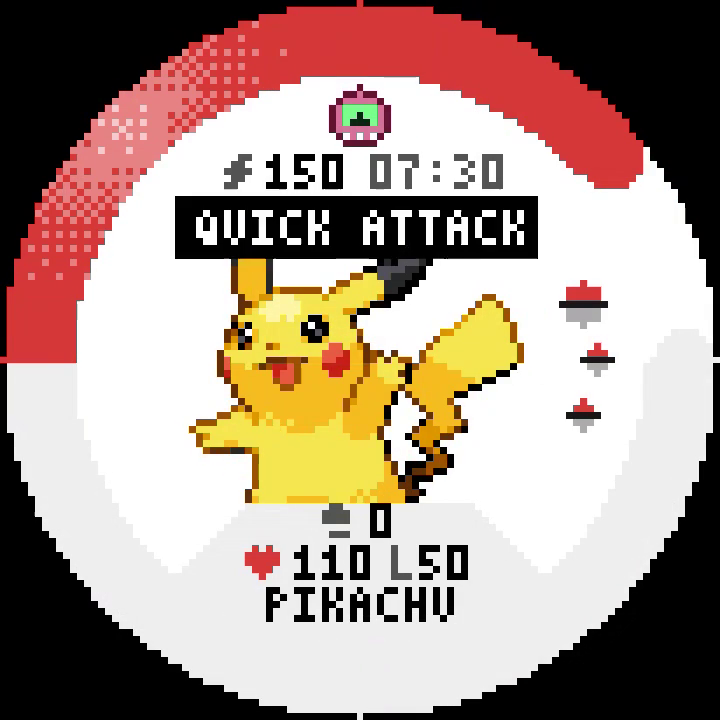
- Tap the Pokémon and it cries and plays one of its real moves
- Five ball styles, Poké to Safari, chosen per team member
Steps and Watts
One Watt a step
- The board's motion sensor has no step counter, so the walker counts steps itself from the raw motion, 62.5 times a second
- One Watt for every step, up to 65,535 in the purse. The original wanted twenty steps a Watt
- Watts buy gym challenges (200), slot spins (5), Poké Radar (10), dowsing (3), searches in the wild (2), better balls and the pet's furniture
- A 10,000-step daily ring and a seven-day history
The team
Six, and a roll between them
- Up to six Pokémon, shown as a column of balls down the right of the face, each in its own colour
- Flick up or down and the ball rolls a whole turn and opens on the next member, with its cry
- All 251 species of the first two generations know their real moves and play the cartridge's own animations
- Levels and experience on Generation 1's curves: the lead earns a point a step, the rest one every four
Pet mode
A Tamagotchi in Gold's bedroom.
The room
Your lead moves in
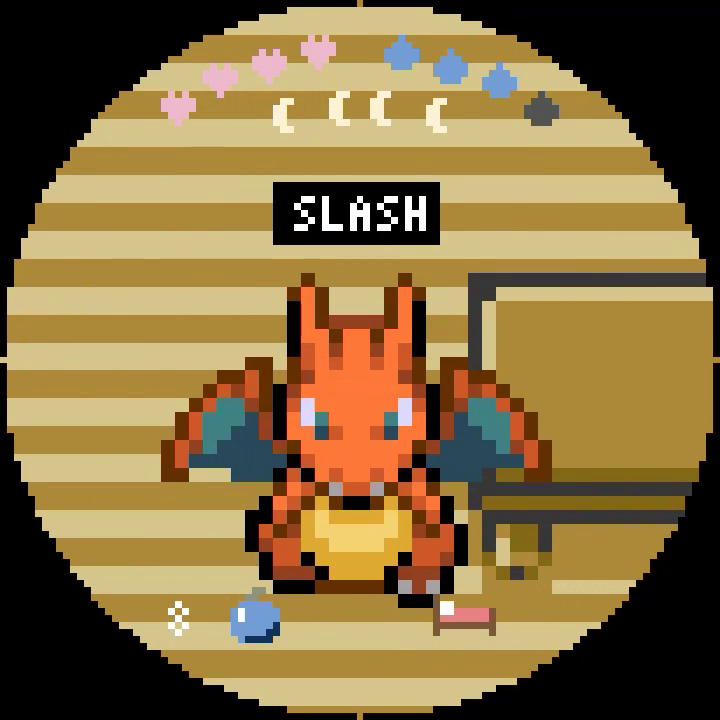
- Tap the egg at the top of the face and your lead walks into the bedroom from Pokémon Gold
- It gets hungry, sleepy and bored. Rub it, feed it berries, throw it a ball
- Neglect makes it sad and nothing worse: no fainting, no running away
- Teammates drop in to play, and every so often it uses one of its moves on its own
The rest of it
A shop, eggs and evolutions
- PORYGON's PC sells furniture and food for Watts, at Gold's prices
- Mom sends dolls at 10,000, 30,000, 50,000 and 100,000 lifetime steps
- Two happy friends leave an egg that hatches after 2,000 steps
- Friendship evolutions happen in the room
The games ring
Twelve icons round the rim, one double-tap from the face.
Radio
44 tracks, played by a sound chip
- Every looping song from Pokémon Blue plus Yellow's extras, including the Game Corner and Surfing Pikachu's theme
- Stored as notes for an emulated Game Boy sound chip, not as audio: 440 KB instead of about 30 MB
- Star a favourite and it sorts to the front, and stays there after power-off
Slots · Radar · Dowsing
Three ways to spend Watts
- Slots: three rings turning round the glass, tap to stop each one. Three of a kind wins, 1 in 64
- Poké Radar: the original's rustling bushes, with chaining for shinies
- Dowsing Machine: six spots, two guesses, "It's near!" or "Far away!". One find in ten is a rare TM
Surfing Pikachu
Yellow's minigame, on a round wave
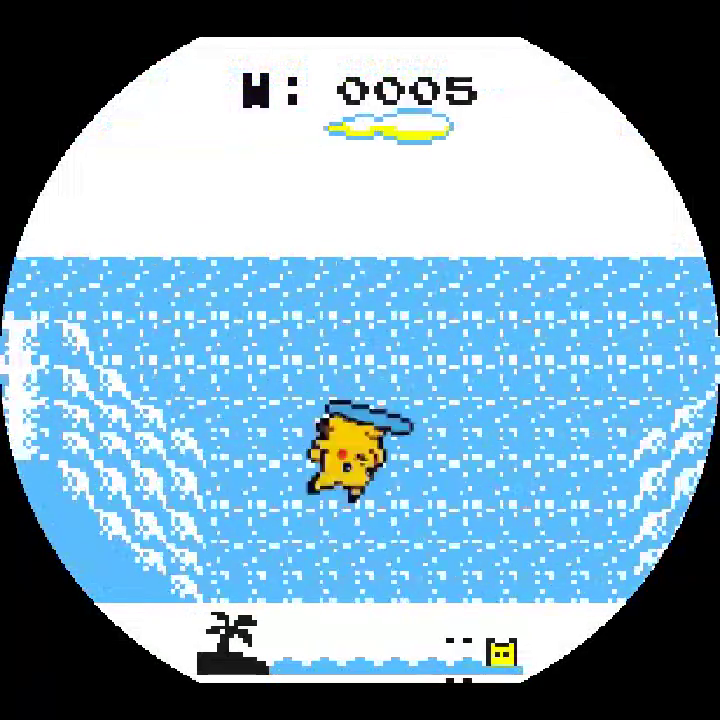
- The physics and scoring are ported from Pokémon Yellow's own minigame
- Ride the waves and jump them for points
- The rest of the ring is the pedometer, pet mode, settings, the trainer card, BATTLE, RALLY and the PC
RALLY and the park
Somewhere to go, and other people to meet there.
RALLY
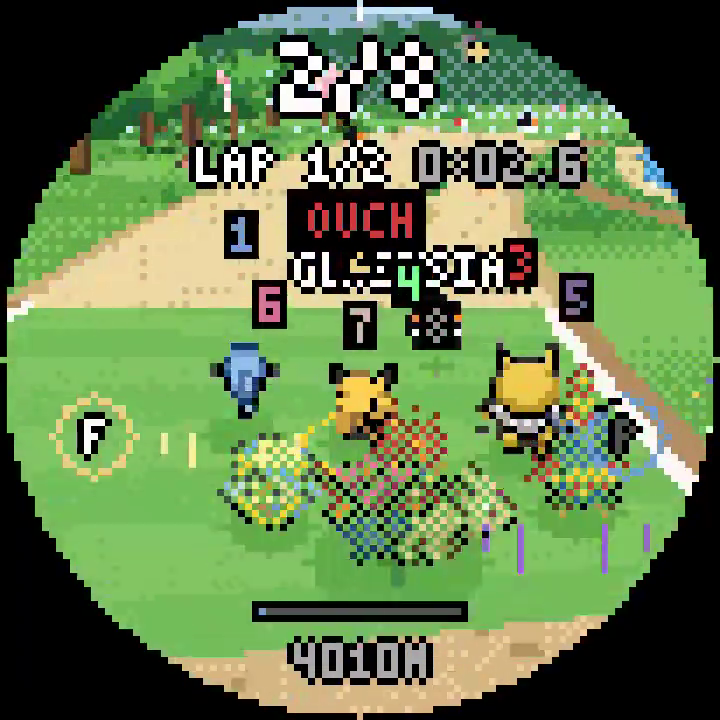
Two laps against seven rivals
- Your lead races a field of eight over three courses: Lakeside Loop, Forest Run and Grand Circuit
- It runs itself. Hold a side to steer, tap for its fast move, flick for its power move
- Rain, sun and sandstorm, and traits read from each racer's own stats
- The same seed and the same inputs make the same race anywhere, so a whole run keeps as a ghost under 3,000 bytes
The park
One world, shared
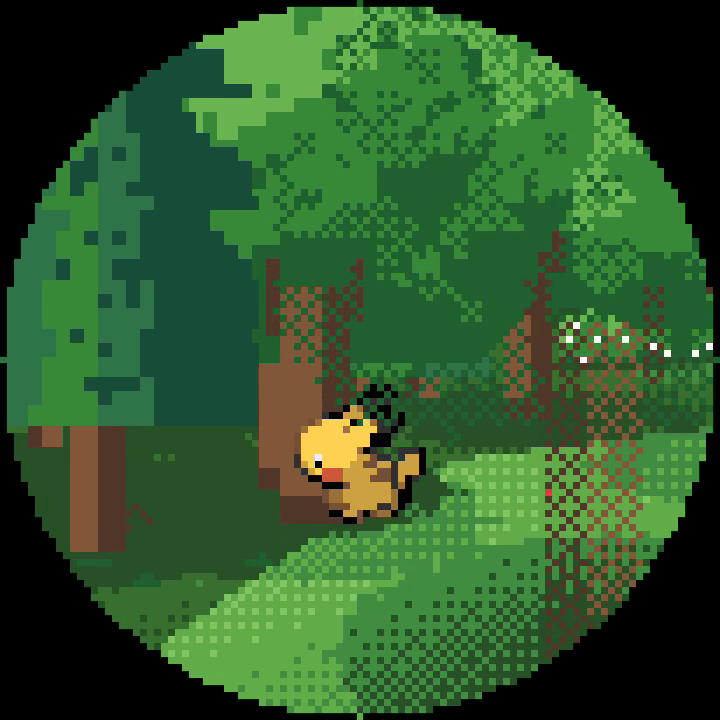
- A single park that walkers and the portal's web page share in real time, drawn by the stadium's own camera
- Offline, your lead wanders it on its own and the camera follows
- Online, you steer, and see up to sixteen other trainers near you
- Only public profiles appear to other people
Trade, WiFi and updates
The link cable
A Gen 1 trade, byte for byte
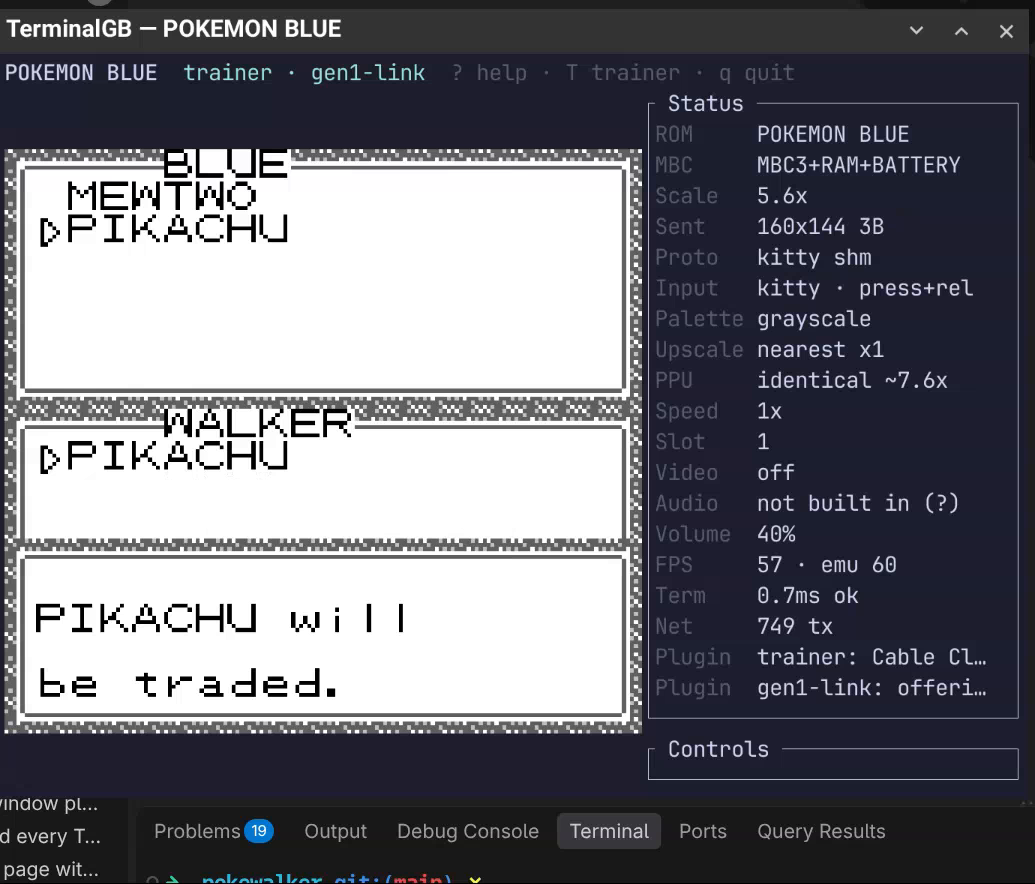
- The walker is its own Generation 1 trade partner. SEND offers a token; TAKE BACK gives up a team member for whatever the game offers
- Checked against a partner verified on a real Pokémon Blue: 900,000 fuzzed bytes over 300 sessions, every answer the same
- A recorded real Blue trade plays through the board's own code and ends traded
WiFi
Set up from a phone
- Hold the closed ball's button. The walker opens a hotspot named
POKEWALKER-XXXX - Join it and a page opens: pick your network, type the password, choose a trainer name and one of HeartGold's 129 trainer looks
- The radio is never on at boot, and the hotspot closes itself when it's done
Updates
Over the air, with a way back
- New firmware is checked against a signing key built into the walker, then downloaded in resumable pieces into the spare slot
- The new build boots on trial. If it fails three times, the walker goes back to the old one
Shorts
Vertical videos written as a script.
pw-shorts
A plain-text script in, a vertical video out
- A short is a text file of lines like
use venusaur PETAL_DANCE on meganium - Everything on screen is drawn by the walker's own code: Gold's move animations and their sounds, the League stadium, the sixteen arenas, the wild areas
- 1080×1920 at 30 frames a second, with sound
What it's built of
| Crate | Lines | What it is |
|---|---|---|
pw-pet | 124,263 | The walker itself: every screen, the walk, pet mode, the games, the stadium, RALLY, the park, the sound chip |
pw-pet-window | 18,653 | The desktop simulator, with recording and scripting |
pw-pet-firmware | 10,293 | The board build: panel, touch, keys, steps, WiFi, updates, the link port |
pw-shorts | 9,394 | A maker for short vertical videos of the walker |
pw-battle | 5,513 | The battle engine, shared by the walker, the browser and the server |
pw-link | 3,047 | The Generation 1 trade partner and its cable driver |
| Fourteen more | 19,035 | Browser builds, the panel drivers, graphics tools, a save editor |
Where it stands
- Much of it has only run in the simulator. The walk, the touch screen, both keys, steps and battles run on the board. RALLY, the online park and over-the-air updates have not been tried there yet.
- The step counter is too strict. It counts real steps on the board, but drops most of them.
- The link port has never met a console. Its driver is written and a real recorded trade passes through it, but the adapter board between walker and cable isn't built.
- The shell has not been printed. Everything so far is renders and in-browser previews of the model.
- The open world is renders only. Its layout, arenas, weather and wind run in the engine on a desktop; none of it is on the walker yet.
- The portal isn't online yet. It runs locally, and the walker's secure connection to it has not been tried on the board.
Plans
What's next.
- Double battles. In progress: two Pokémon a side, moves that hit both, four-way turn order.
- Seismic Toss. In progress: physical moves where the attacker and target actually move through the stadium, Seismic Toss first.
- XP bars. Experience is already earned; the bars will show it.
- More league formats for the monthly seasons.
- Races in the park. Live RALLY races you can watch from inside the shared park.
- The whole crowd. The park on the walker showing everyone in it, not just the nearest sixteen.
- A swarm survival minigame.
- A minigame starter kit, so a new game for the ring starts from a working one.
Milestones
The film, and the big moves
Surf, Earthquake, Thunderbolt and Thunder get effects of their own in the stadium, and the walker gets a one-minute promo film. Watch it →
Battles, a stadium, and sixteen gym leaders
Generation 1 battles with three lanes and a secret stance, played out in a 3D stadium, and Gold's sixteen leaders building their teams to match yours. The same day, the walker counted its first real steps on the board.
Pet mode, and the moonwalk
One of your Pokémon moves into the Gold bedroom: fed, rubbed, visited by the rest of the team, dancing to the radio. A bug made it moonwalk away from a friend; now every song ends that way. Read it →
A Generation 1 trade partner, checked against the real one
pw-link landed with an oracle test beside it: the same bytes fed to it and
to a partner verified against a real Pokémon Blue, with every answer required to match.
The build target becomes the Waveshare board
A round 412×412 touch panel bought in rather than built, with the Poké Ball drawn on the glass and the shell printed round it.
The software becomes this project's own, in Rust
The earlier C reference stays something to check against. Everything that ships from here is written from nothing.
The infrared had to go
The first hardware line: a Game Boy link interface where the infrared was, in a machined steel ball. Superseded by the Waveshare board. Read it →
The first commit
KiCad hardware for a real Pokéwalker, on a forked RP2350 board.
Writing
-
A minute on the glass
A sixty-second film of the Pokewalker, the round ball turning while the walker's own screen plays on its glass.
-
The leader reads your team
Sixteen gym leaders, each in a stadium built in their own style, each sizing up the team you bring.
-
The stadium shakes
Battles in a League stadium on the round screen: the match card, three lanes of dodging, beam struggles and knockouts that crack the wall.
-
Dodge left, take double
Generation 1 battles with three lanes and a secret stance every turn. Jump the wrong way and an attack lands for double.
-
The moonwalk was a bug
One of your Pokémon in the Gold bedroom, fed, rubbed and visited by its friends. Then a friend turned up mid-dance and the pet walked off backwards.
-
The infrared had to go
A 74LVC2G17 where the infrared transceiver was, and a ⌀70 steel ball to put it in.
Where these numbers come from
Every figure is read or counted from the project's repository as of 15 Nov 2026: line counts per crate, the game rules from its own source, the 900,000-byte trade check from its oracle test. The clips are the walker's own software recorded at its native 412×412 and scaled up without smoothing; the turning ball and the hero picture are Blender renders of the shell's model with real screen footage on the glass. The shell views are CAD renders of the current design, and the region views are renders from the world engine on a desktop. The portal pictures are screenshots of it running locally.
Pokewalker is a personal reimplementation of a Nintendo accessory, and the source repository is private. The Pokémon, trainers, rooms, sounds and music on its screen come from the owner's own cartridges when the software is built; the repository stores none of them, and the browser demo uses its own stand-ins. The badges, arenas, park, race courses and leaders' lines are the project's own. Pokémon is Nintendo's.